
Modern Staircase Ideas with Sleek Wood and Iron Designs
The pairing of warm, light oak wood with bold black iron spindles creates a modern elegance that works well in Scandinavian, farmhouse, and transitional homes. This combination offers a minimalist yet grounded look, balancing natural warmth with striking contrast for a refined aesthetic.
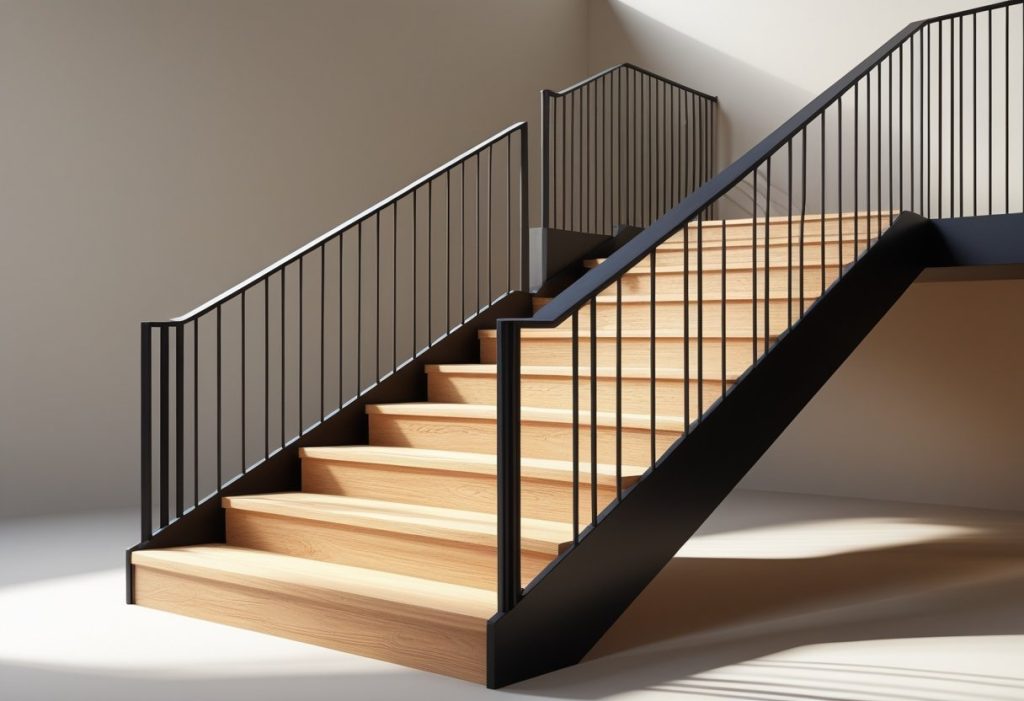
Floating treads add openness and architectural interest, making the staircase feel airy and spacious—an excellent choice for open-concept layouts or compact entryways. Complementing the design, a cozy seating area with clean-lined white chairs and tasteful navy accents uses the under-stair space effectively, enhancing the overall appeal.
Textured board and batten wall paneling in white brings subtle dimension without clutter, harmonizing with the staircase’s vertical lines. Styling with neutral tones, deep accent colors, and matte black or brushed brass fixtures helps maintain a timeless and cohesive look.
Light Wood and Black Iron: The Modern Elegance Staircase
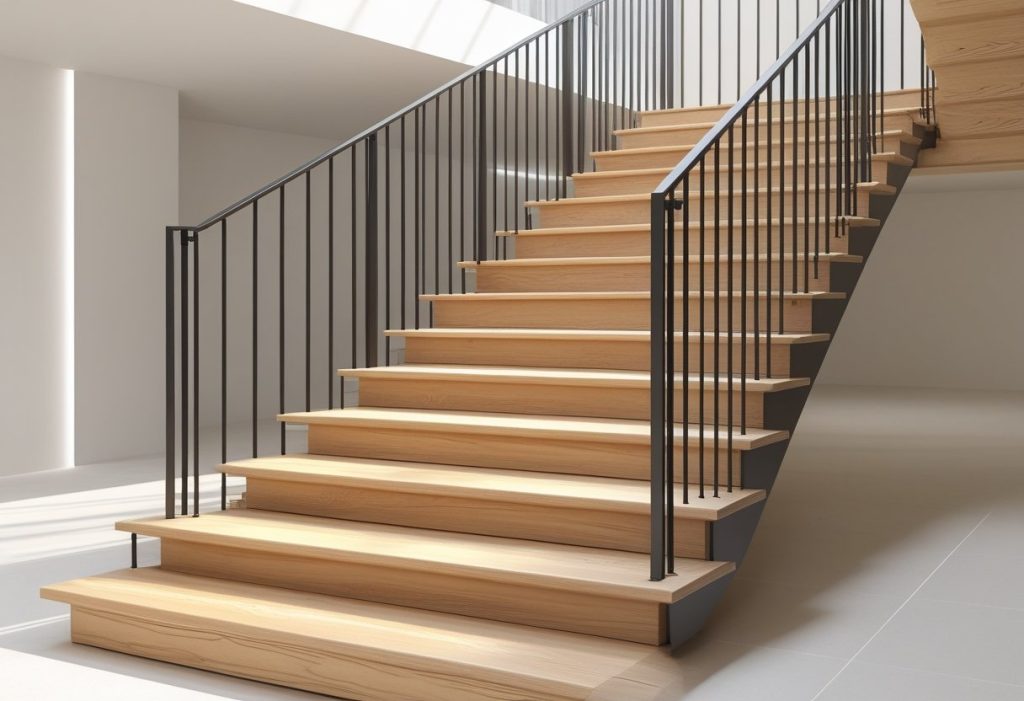
This staircase combines the warm, natural texture of light oak wood with the bold contrast of black iron spindles. It balances warmth and structure, creating a focal point that is both refined and functional. The design reflects principles of simplicity and durability, fitting well within modern and transitional interiors.
Aesthetic Appeal of Light Oak Wood
Light oak wood offers a warm, inviting tone that naturally enhances any interior space. Its subtle grain pattern adds texture without overwhelming the visual balance of a room. The wooden treads and handrails provide a tactile surface that feels natural underfoot and contrasts gently with cooler materials.
The light wood also brightens areas that may otherwise feel dark or heavy, especially when paired with large windows or open layouts. Its versatility allows it to complement styles from Scandinavian minimalism to farmhouse warmth. In a staircase, the wood’s softness tempers the industrial edge of metal components, creating a harmonious blend.
Impact of Bold Black Iron Spindles
Black iron spindles serve as a strong visual anchor for the staircase. Their dark, matte finish contrasts sharply with light wood, highlighting the structure’s clean lines and geometric form. Wrought iron balusters add durability and a handcrafted element, elevating the modern aesthetic without appearing stark.
The boldness of the metal railings creates rhythm and pattern, drawing the eye upward and emphasizing vertical space. The black finish resists wear, offering a practical yet stylish choice for busy households. This contrast also accentuates architectural details, making the staircase a statement piece within an entryway or living area.
Minimalist and Grounded Design Principles
This design employs minimalist ideals by focusing on essential elements without unnecessary ornamentation. The combination of open risers, simple handrails, and slender iron spindles reduces visual weight, promoting an airy, open feeling. It aligns well with grounded design by using natural materials in their authentic form.
The clean lines and restrained palette contribute to a sense of calm and order. Neutral tones unify the wood and metal, while the tactile contrast anchors the space. This restrained balance works seamlessly in transitional homes seeking timeless appeal that adapts to evolving aesthetics and practical needs.
Floating Treads and the Open Staircase Concept
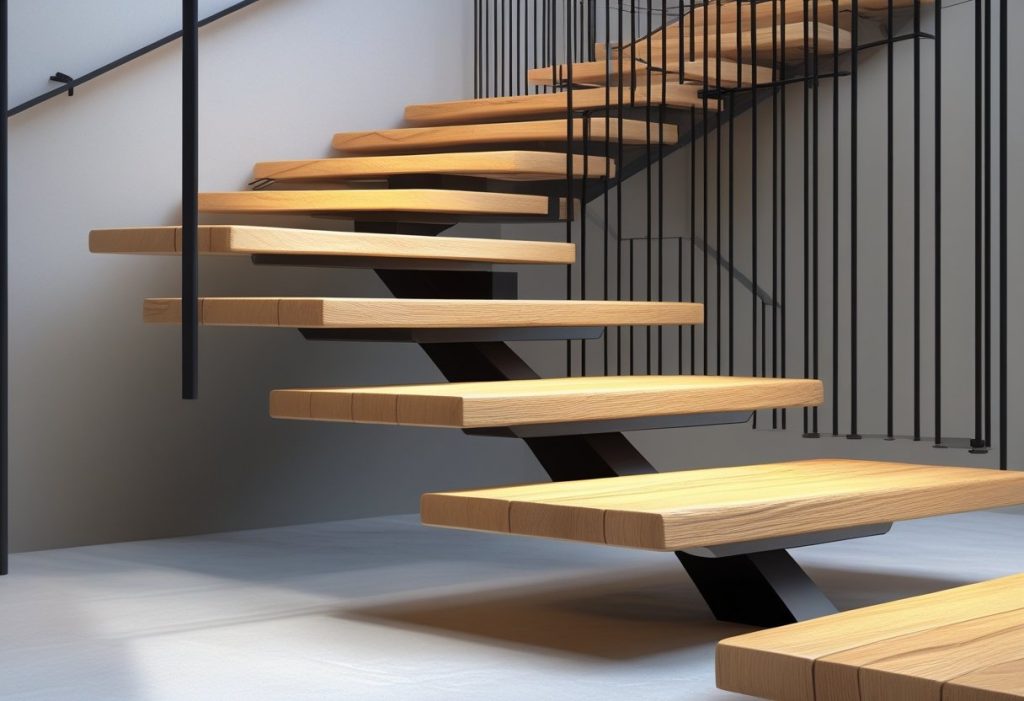
Floating treads create a visually light and spacious effect in interiors by removing risers and emphasizing clean lines. This design approach enhances natural light flow and complements modern interiors by promoting an airy atmosphere. Its adaptability makes it suitable for various home layouts, from compact entryways to expansive open-concept areas.
Benefits of Floating Staircase Treads
Floating treads reduce visual bulk by eliminating risers, which makes staircases appear less intrusive. This minimalist approach emphasizes the structure’s geometric form and provides a sleek, modern aesthetic.
They also improve spatial perception, creating the illusion of more floor area. This is valuable in smaller spaces where a bulky staircase can overwhelm the room.
Furthermore, floating treads often use materials like light wood or glass, combining durability with a refined look. The absence of risers also simplifies cleaning and maintenance compared to traditional staircases.
Enhancing Airy Feel and Natural Light
Open treads allow light to pass through, increasing daylight distribution across adjoining rooms. This effect brightens interiors without the need for additional lighting fixtures.
The transparency between steps prevents shadows and dark corners under the staircase, keeping the area visually open. This quality is essential for maintaining an airy feel in modern interiors, where openness and light are priorities.
The interplay of shadows and light on floating treads adds subtle architectural interest without clutter. It creates a dynamic but unobtrusive focal point that enhances, rather than dominates, the space.
Suitability for Various Layouts
Floating treads adapt well to open-plan homes, where visual continuity supports the overall flow. They work particularly well in living areas that combine multiple functions, enabling the staircase to serve as both structure and design element.
Smaller layouts benefit from floating stairs by maximizing available space, especially in narrow entryways or compact foyers. Their minimal footprint allows for additional uses, such as seating or storage, underneath.
This staircase style also fits a range of decor styles—from Scandinavian and farmhouse to transitional—due to its simple yet solid presence. Its flexibility ensures it complements both rustic warmth and modern sleekness effectively.
Modern Ironwork: Spindles, Balusters, and Handrails
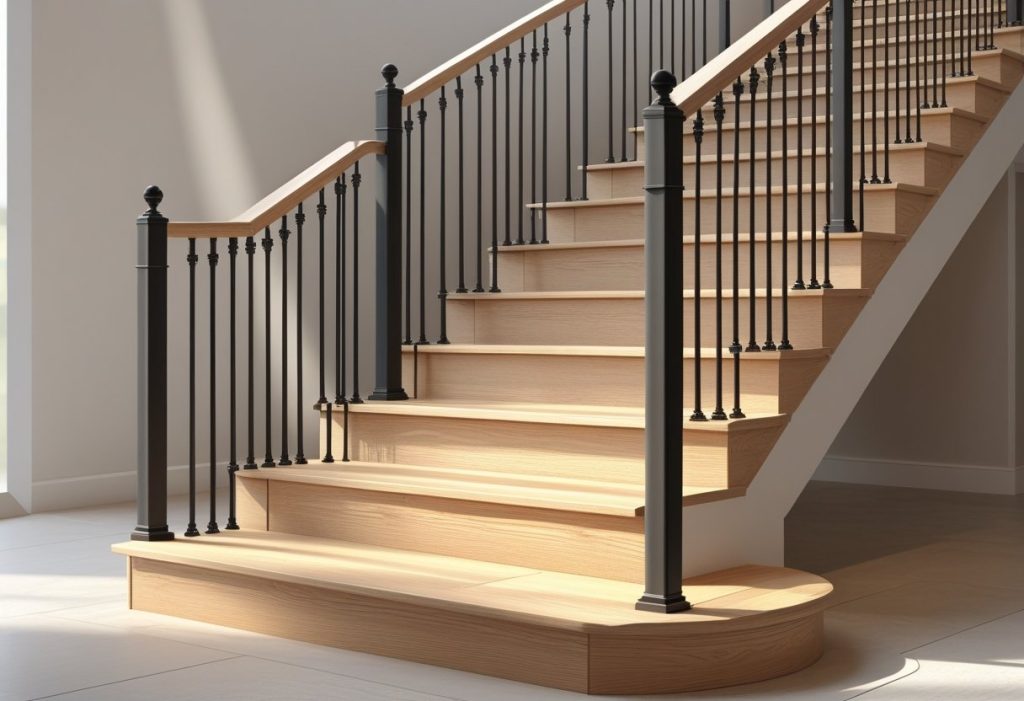
Ironwork in modern staircases combines durability with design precision, offering versatile options that enhance both aesthetics and function. The right choice of balusters and handrails can define the staircase’s style, while maintaining structural integrity.
Black Iron Balusters and Spindle Styles
Black iron balusters and spindles provide strong visual contrast, especially when paired with light wood elements. Their crisp, clean lines contribute to a minimalist aesthetic that works well with Scandinavian, farmhouse, and transitional interiors.
Popular styles include tubular and twisted wrought iron spindles. Tubular balusters with a satin black finish are favored for their sleek, unobtrusive profile. Twisted balusters introduce subtle texture without overwhelming the design.
The spacing and size of these iron elements affect both safety and the overall look. Thinner, closely spaced spindles create a delicate feel, while thicker balusters emphasize boldness. Black iron’s durability resists wear and makes it suitable for high-traffic areas.
Complementing Handrails and Metal Elements
Handrails often combine iron with warm wood, such as oak, to balance hardness with natural warmth. Ebony-stained or matte black handrails align stylistically with iron spindles, creating a cohesive design language throughout the staircase.
Choosing the right finish on handrails—whether brushed brass, matte black, or ebony-stain—impacts the room’s tone. Metal railings paired with contemporary wood handrails support an architectural contrast, enhancing visual interest.
Functional details, such as chamfered tops on newel posts or custom-shaped handrails, contribute to both comfort and style. Properly matched metal elements throughout a space unify the interior design, elevating the staircase as a key focal point.
Architectural Details: Board and Batten Paneling
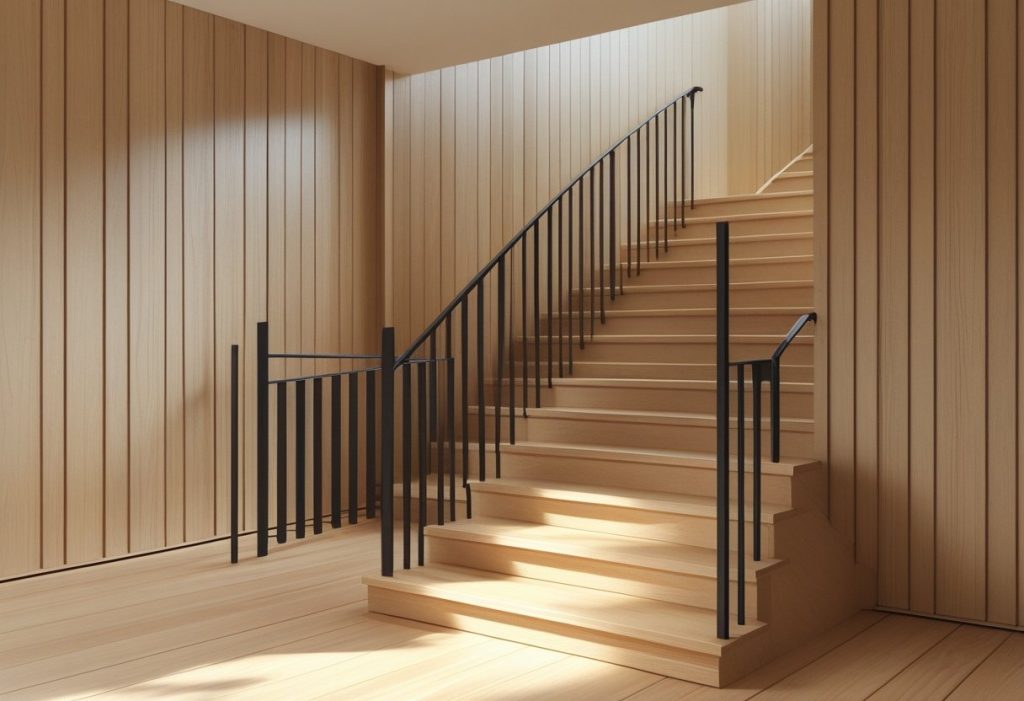
Board and batten paneling adds depth and structure to interior walls without creating visual clutter. It integrates seamlessly with modern décor while providing an architectural element that elevates the space. This paneling technique enhances texture and creates a smooth visual flow between the staircase and surrounding walls.
Textural Enhancement Through Wall Treatments
Board and batten introduces subtle relief by alternating wide boards and narrow battens vertically. This layering adds dimensionality without overwhelming the room. The white paint finish maintains a clean, bright look that complements light oak wood and black iron accents.
This treatment is effective in highlighting vertical lines, which accentuates ceiling height and gives the wall an understated architectural interest. It works well in minimalist or transitional interiors by contributing texture without clutter or distraction.
Visual Transition from Staircase to Wall
The paneling acts as a bridge visually connecting the staircase’s light wood tones and dark iron spindles with the adjacent wall. Its vertical battens echo the linear rhythm of the black iron, creating cohesion between functional elements and decorative surfaces.
Positioning board and batten at the base of the stairs adds balance to the overall design, making the stairwell feel integrated rather than arbitrarily placed. This seamless transition strengthens the room’s flow while enhancing the sense of openness in compact or open-concept areas.
Entryway and Under-Stair Seating Area
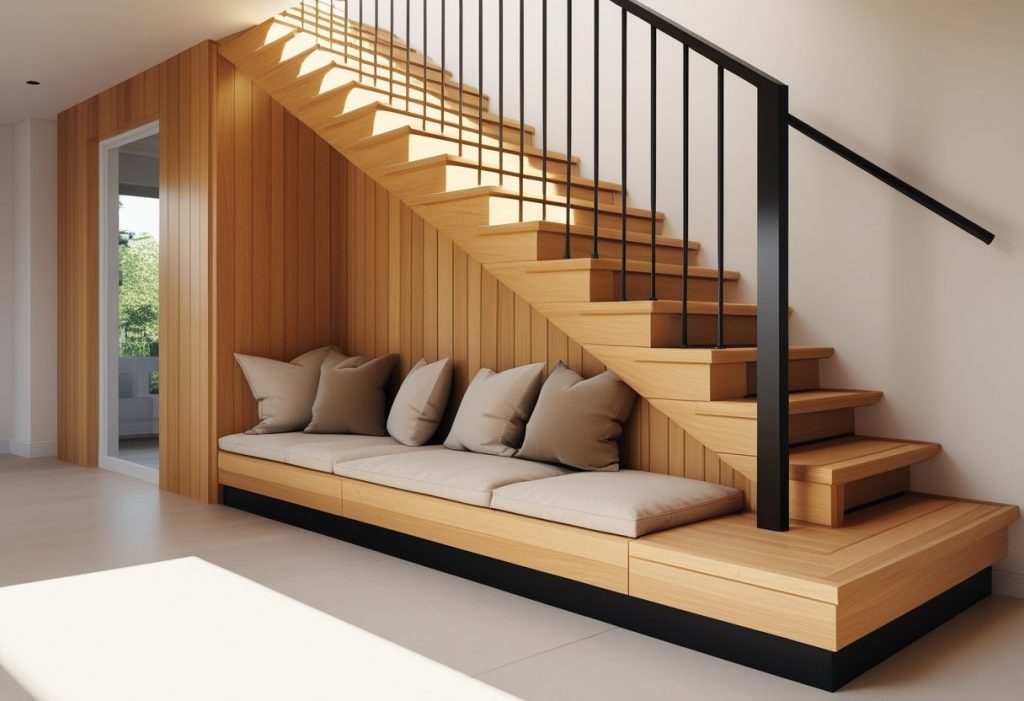
This design maximizes entryway function by integrating a practical seating nook beneath the staircase. It uses clean lines and thoughtful decor to create a cohesive, inviting space that complements the staircase’s light wood and black iron elements.
Creating a Functional Accent Seating Nook
The under-stair area can transform into a purposeful, compact seating zone. Using white chairs with simple, straight lines maintains the modern interior’s minimalism. Adding navy velvet pillows introduces comfort and a subtle color contrast without clutter.
This nook serves multiple purposes—waiting area, quick shoe removal spot, or a reading corner. It operates efficiently within often overlooked space. Keeping the seating low-profile preserves openness, crucial in smaller or narrow entryways.
Light wood tones from the staircase extend visually into this area, while black iron accents on nearby fixtures reinforce style continuity. The placement ensures the nook does not obstruct walkway flow, making the entryway appear larger and well-organized.
Styling Inspiration: Color and Comfort
Neutral hues form the seating nook’s base, allowing deeper accent colors to stand out. Navy and emerald tones in cushions create timeless focal points. These colors complement the warmth of the light oak stairs and the black iron spindles.
Adding greenery, such as potted plants or small olive trees, softens the modern structure’s edges. These introduce natural texture, balancing sleek, hard surfaces.
Lighting selections favor matte black or brushed brass finishes, echoing the staircase’s metalwork. Fixtures positioned near the nook enhance usability and highlight architectural features without overwhelming the space.
This styling strategy maintains a sophisticated, accessible entryway that feels both purposeful and welcoming.
Lighting Choices for Elevated Modern Aesthetic
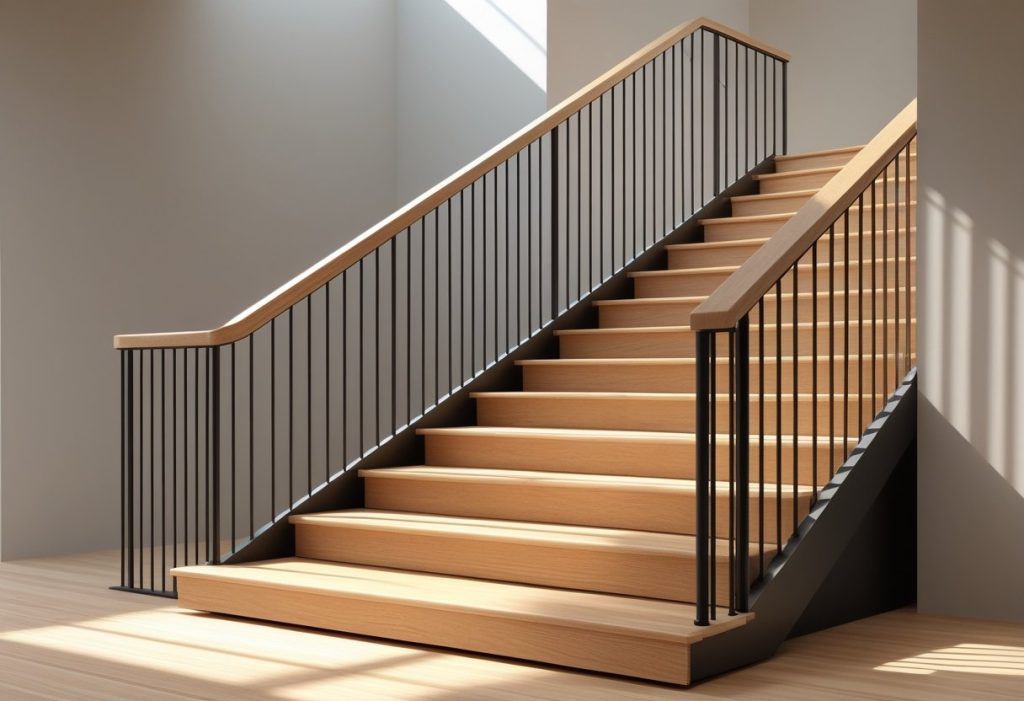
Lighting plays a crucial role in emphasizing the contrast and textures within a staircase design. Selecting fixtures that balance form and function can enhance the overall ambience and complement the materials used.
Modern Chandeliers and Pendant Lighting
Modern chandeliers create a focal point by combining sleek lines with artistic shapes. Fixtures with matte black finishes or brushed brass details echo the black iron spindles and warm wood tones.
Pendant lights work well in clustered or linear arrangements above the stairwell or adjacent areas. Choosing minimalist designs with clear or frosted glass shades keeps the look contemporary without visual clutter.
Height and scale are important. Chandeliers should hang high enough to remain out of reach but low enough to provide balanced illumination. In narrow spaces, slim pendant designs help maintain openness.
Integrating Lighting Fixtures with Design
Lighting integrated within the staircase structure enhances both safety and style. LED strip lights installed under the handrail or treads provide subtle indirect light and highlight architectural elements.
Wall sconces in matte black or brass finishes can be positioned to cast warm, layered light on the board and batten paneling. This adds depth and texture without overwhelming the space.
Incorporating dimmable options allows adjustment from ambient to task lighting. Strategic placement ensures the wooden steps and black iron details are consistently highlighted, reinforcing the modern aesthetic cohesively.
Expert Styling Tips for Bringing the Look Together
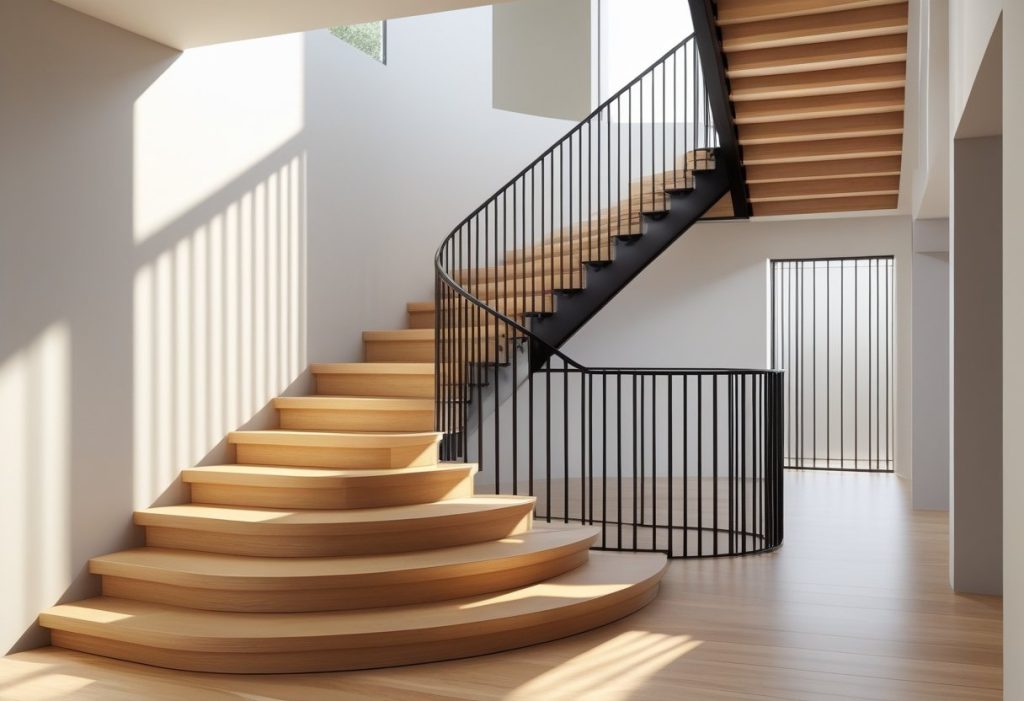
Balancing the warmth of light wood with the boldness of black iron requires intentional choices. Incorporating natural elements, thoughtful color combinations, and complementary finishes ensures the space feels cohesive and modern without losing warmth.
Using Plants for Softness
Plants introduce organic shapes that contrast the clean lines of modern interiors. Olive trees or tall potted plants work especially well because their muted green tones soften the harsher black iron while enhancing the warmth of the oak wood.
Smaller greenery placed on side tables or shelves helps break up the structure visually. The key is selecting plants that maintain the minimalist aesthetic without overwhelming the space.
Their natural texture adds dimension and life, contributing to a balanced atmosphere that feels inviting rather than cold or overly industrial.
Choosing Colors for Longevity
Neutral tones form the base of the color palette because they enhance both the light wood and black elements. Whites, creams, and soft grays reinforce the modern feel while keeping the space bright.
Deep accent colors like navy or emerald add richness and depth without clashing. These shades pair well with warm wood tones and create an upscale, timeless vibe when used in pillows, rugs, or artwork.
This approach avoids trends that can quickly date a space, ensuring a sophisticated, lasting color scheme suited for various design styles.
Selecting Finishing Touches
Lighting and hardware finishes should echo the staircase’s black iron spindles or contrast subtly without competing. Matte black or brushed brass fixtures complement the railings and add polish.
Metallic accents visually link different elements within the room, unifying the design. Consider subtle pieces like drawer pulls, lamps, or door handles.
Textured fabrics in seating or cushions help balance sleek wood and metal surfaces. Choosing timeless materials ensures these touches enhance rather than distract from the modern yet warm interior.

Ana Luisa
Explore in-depth biographies, net worth insights, and exclusive updates on your favorite singers at Trionua.com. Discover the journeys, achievements, and latest news about music’s biggest stars.


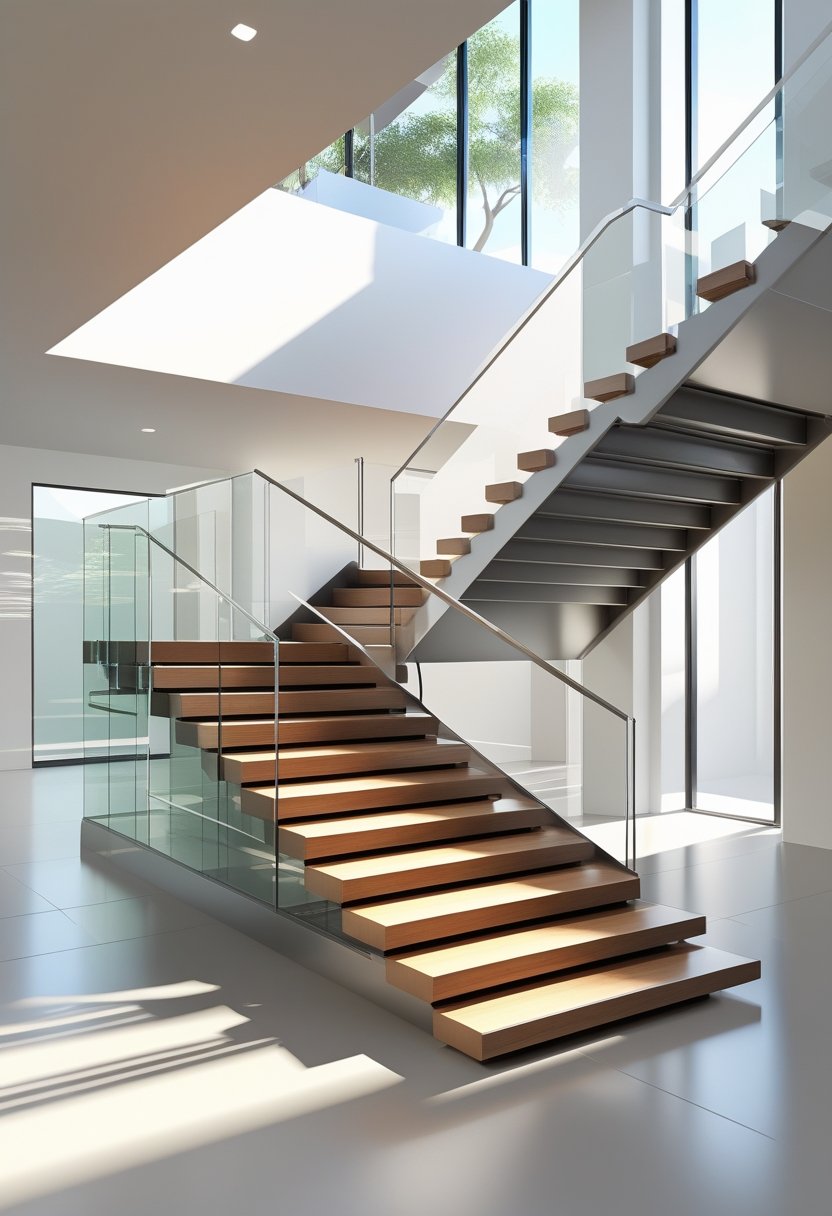 **A well-designed [contemporary staircase](https://trionua.com/modern-staircase-ideas/) merges sleek geometric details with inviting wood finishes to achieve both style and practicality in any home.** This combination transforms staircases from simple connectors into key architectural features that enhance a room's ambiance. By focusing on material contrasts and thoughtful design, staircases incorporate space-saving solutions and elegant lighting, making them more than just a means of moving between floors—they become a defining element of the living space. ## Core Elements of Contemporary Staircase Design 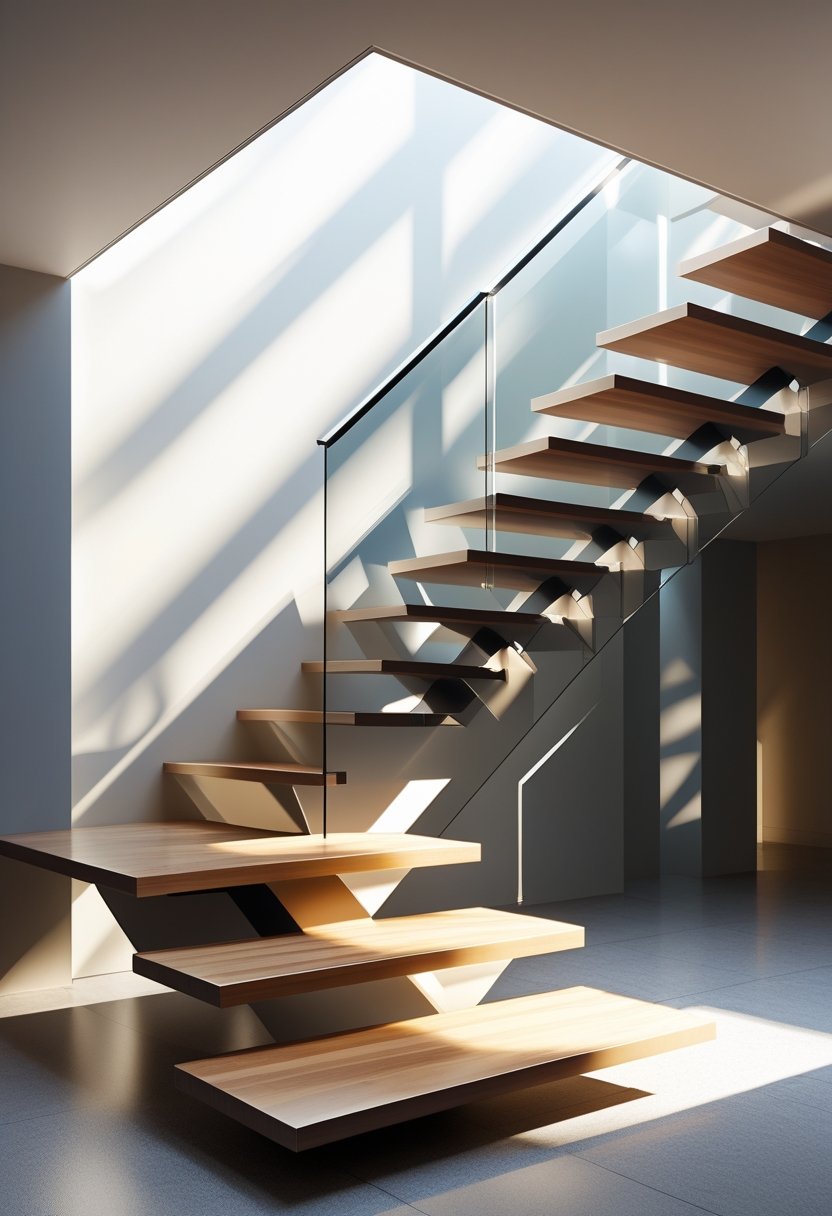 Contemporary staircases balance aesthetics with practical use, drawing attention through clean lines and thoughtful material choices. Key considerations include how the design maximizes space and light, while ensuring safety and ease of use in modern homes. ### Balancing Style and Functionality A contemporary staircase must deliver both visual appeal and secure, practical use. It often features geometric railings that act as artistic statements while providing sturdy support. The design includes precise proportions to ensure comfort in stepping, avoiding overly steep or shallow risers. Integrated lighting, such as LED strips under steps, improves safety without disrupting the clean look. Functionality extends to [storage options](https://trionua.com/elegant-under-stairs-nook/) built beneath stairs, merging utility with style. Modern staircases emphasize durability and ease of maintenance, balancing sleek design with everyday use. ### Emphasizing Open and Airy Concepts Modern staircases often incorporate open risers or transparent materials like glass panels to create a sense of spaciousness. These choices allow [natural light](https://trionua.com/terrace-goals-light-filled-luxury-spaces/) to flow through the structure, maintaining an open feel essential in contemporary interiors. Avoiding bulky components keeps the staircase visually light. This approach fits well in smaller or multi-purpose areas by maximizing perceived space. Geometric railings, often made from metal or cable, add structure without closing off sightlines, enhancing the staircase’s sculptural quality. ### Choosing the Right Materials Material selection directly influences both style and longevity. Wood is popular for its warmth and natural texture, often paired with metal or glass to introduce modern contrasts. For railings, metals such as steel or aluminum provide strength and a sleek finish. Glass panels increase transparency and modernity, while also offering safety without disrupting the design’s flow. The right combination—for example, warm wooden treads with geometric metal railings—creates balance. Materials are chosen not only for aesthetics but also for durability, ensuring the staircase suits the demands of daily use in modern homes. ## The Impact of Geometric Railings 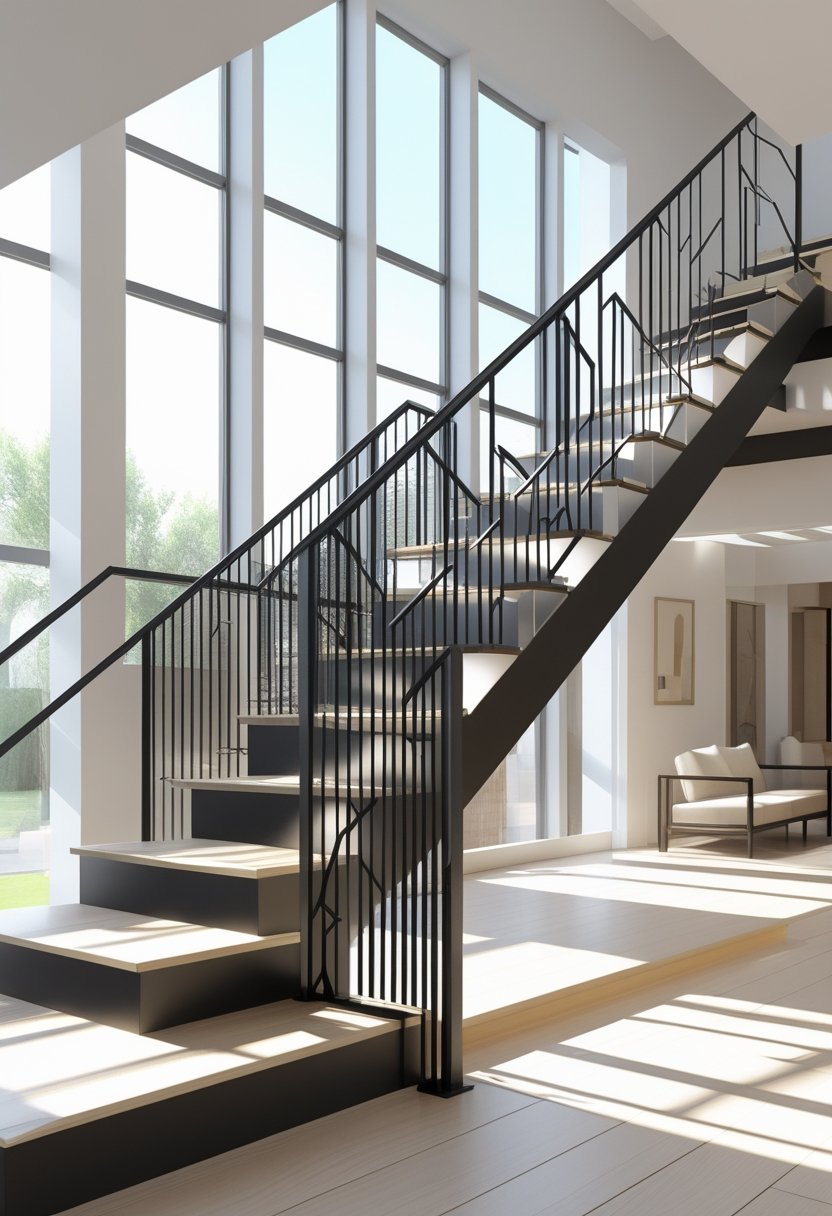 Geometric railings offer a precise balance of style and structural function, shaping the visual language of contemporary staircases. Their patterns define the space and influence lighting, texture, and the overall spatial experience. Focused choices in design and materials ensure that these railings become both an architectural anchor and a refined aesthetic statement. ### Statement-Making Geometric Patterns Geometric railing patterns use shapes like triangles, diamonds, and interlocking polygons to create visual interest. These often rely on repetition, symmetry, and angular lines to guide the eye. Patterns such as diagonal bars or intersecting grids give staircases a bold and modern presence. When arranged thoughtfully, they can emphasize height and draw attention to a staircase’s form. These designs also provide safety without creating visual bulk. The openness of [geometric railings](https://trionua.com/modern-glass-house/) allows light to permeate the area, maintaining an airy feel. ### Materials and Finishes for Railings Metal railings are the most common choice for geometric designs due to their strength and flexibility. Steel and aluminum enable thin, clean lines that hold complex geometric shapes reliably. Popular finishes include matte black, brushed nickel, and powder-coated colors that enhance durability while complementing various interiors. Metal’s reflective qualities can contrast or harmonize with warm wooden accents on stair treads or handrails. Proper treatment prevents corrosion and maintains the railings’ sharp appearance over time. This combination of material and finish is crucial for balancing robustness with style. ### Geometric Design Integration with Architecture A geometric railing should align with the home’s architectural style for coherence. In modern or industrial spaces, metal railings with sharp, angular patterns complement minimalist or exposed materials like brick and concrete. The integration with warm wooden accents softens the metal’s starkness, creating a blend of natural and engineered elements. This contrast highlights different textures and enriches the overall aesthetic. When designed in harmony, the railing becomes part of a greater architectural narrative rather than a disconnected feature. This integration elevates both staircase function and design impact. ## Warmth and Texture: Wooden Accents in Staircase Design 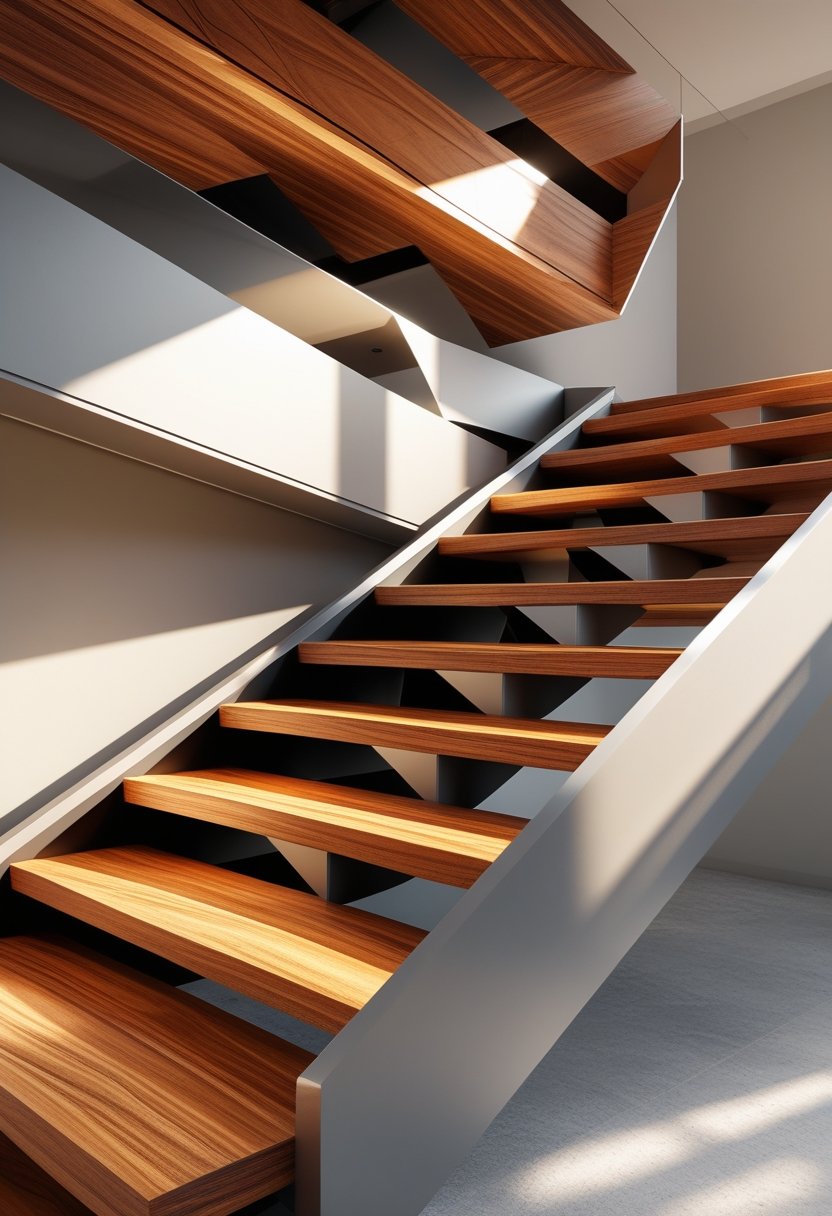 Wooden accents add depth and [natural warmth](https://trionua.com/minimalist-beige-kitchen-with-marble-island/) to contemporary staircases, enhancing both aesthetics and comfort. Key factors include the type of wood used for treads, how wood pairs with other materials, and the finishing touches that define modern appeal. ### Utilizing Wooden Treads for Visual Appeal Wooden treads are a focal point in staircase design, offering tactile warmth and rich texture. They work well in various formats, such as floating staircases and wooden spiral staircases, where the wood’s grain can be fully showcased. Choosing hardwoods like oak, walnut, or maple is common due to their durability and attractive finishes. Thickness and width also affect the look: wider treads create a solid, sturdy impression, while thinner profiles complement minimalist, floating designs. Additionally, contrasting wooden treads against metal or glass risers can create sharp visual interest without compromising warmth. ### Mixing Wood with Modern Materials Combining wood with sleek materials like glass, steel, or white-painted elements balances warmth with modernity. For example, wooden treads with glass railings maintain openness and lightness while preserving natural texture. Metal supports paired with wooden steps emphasize geometry and structure, highlighting clean lines typical of contemporary design. Incorporating built-in storage beneath wooden staircases can also improve functionality without detracting from the wood's tactile quality. Floating wooden staircases exemplify this blend, where the absence of visible supports gives a minimalist feel, and the wood keeps it inviting rather than stark. ### Finishes and Stain Selection for Contemporary Looks Finish selection shapes the tone and durability of wooden staircase accents. Matte or satin finishes maintain a natural look without excessive shine, which fits contemporary styles better than glossy coatings. Light stains reveal the wood’s natural color while brightening a space, especially in smaller stair wells or dark interiors. Dark stains, such as espresso or walnut, provide contrast when paired with white risers or metal railings, enhancing the staircase’s geometric designs. Protective treatments like polyurethane increase resistance to wear without altering texture. Clear finishes that retain the wood's natural grain emphasize authenticity and craftsmanship important in modern wooden staircase designs. ## Popular Contemporary Staircase Styles 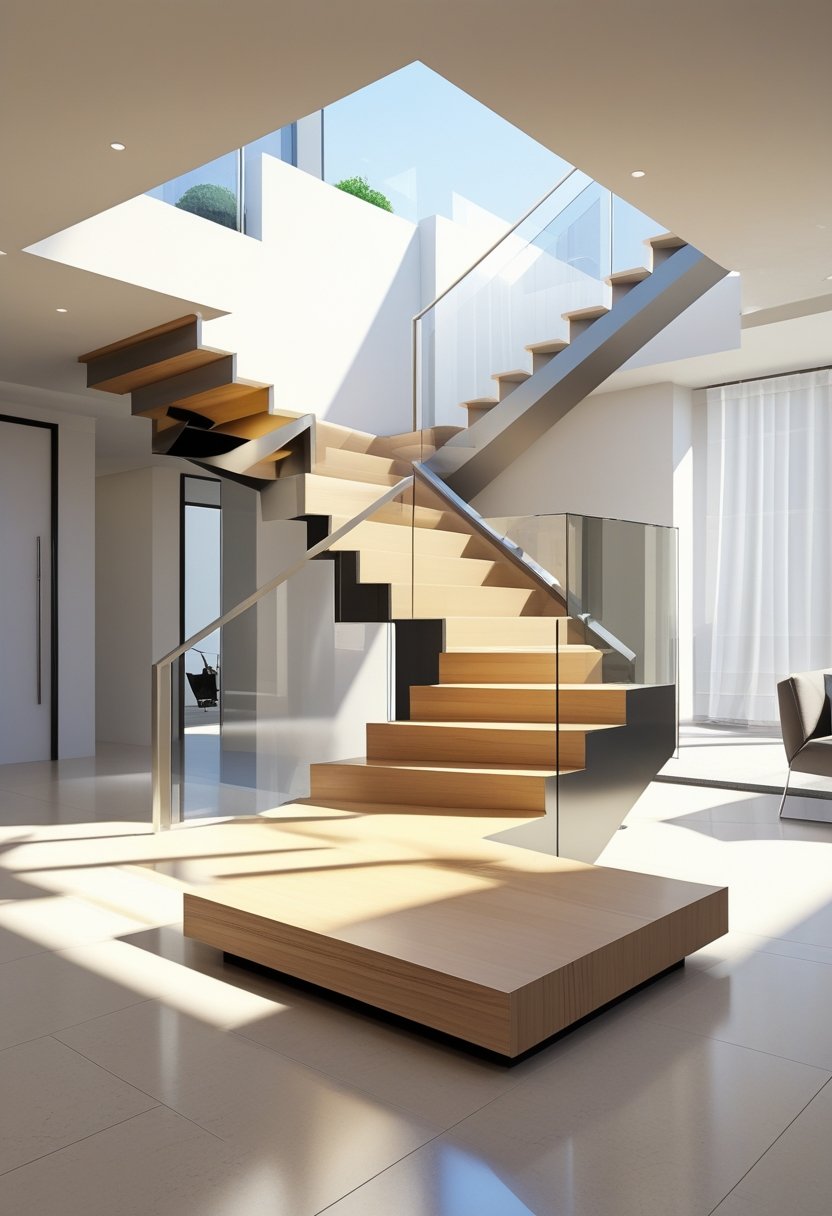 Contemporary staircases often combine [clean lines](https://trionua.com/modern-bathroom-with-marble-lighting/), [innovative shapes](https://trionua.com/entry-door-design/), and carefully chosen materials. Designers focus on maximizing space, light, and visual impact while maintaining practicality. The following styles highlight key trends and design choices in modern stair construction. ### Floating and Cantilevered Staircases Floating staircases create the illusion of steps suspended without support, offering a light and airy feel. Typically anchored on one side, cantilevered staircases extend steps directly from a wall, avoiding bulky stringers. These styles often use [warm wooden treads](https://trionua.com/modern-cozy-small-living-room-decor-ideas/) paired with glass or thin metal railings to balance softness with precision. This combination allows natural light to flow through while maintaining safety. The [minimalist look](https://trionua.com/modern-tv-wall-designs/) emphasizes [open space](https://trionua.com/outdoor-designs/) beneath the stairs, making rooms appear larger. LED strip lighting is frequently installed under each tread to improve visibility and add subtle ambiance. ### Spiral and Curved Staircases Spiral staircases optimize vertical space, ideal for smaller areas. Their cylindrical shape fits compact footprints without sacrificing style. Curved staircases provide smooth transitions between levels with graceful, flowing lines. They often serve as elegant focal points in open-plan homes. Materials vary, but combining metal railings with wooden steps is common to introduce warmth and contrast. Both styles require careful engineering for safety and structural integrity due to their unique shapes. ### Wide, Open, and Zigzag Staircases Wide staircases offer a grand appearance while improving accessibility by providing ample step width. They work well in spacious interiors. Open staircases lack risers between treads, contributing to a modern aesthetic and promoting light circulation. Zigzag staircases feature angular geometric shapes, often echoed in their railings. These designs blend style and function by making movement visually interesting and comfortable. Wood accents alongside metal or glass elements help balance warmth and modernity. ### Minimalist Metal Staircases Minimalist metal staircases emphasize simplicity and durability. They frequently feature clean, straight lines with powder-coated steel or aluminum construction. Railings are streamlined, focusing on geometric patterns such as squares, rectangles, or linear bars. These provide visual structure without overwhelming other design elements. Metal staircases pair well with wooden treads or accents, softening industrial materials with natural textures. The emphasis is on functionality and an uncluttered appearance that complements contemporary interiors. ## Maximizing Functionality in Modern Staircase Designs 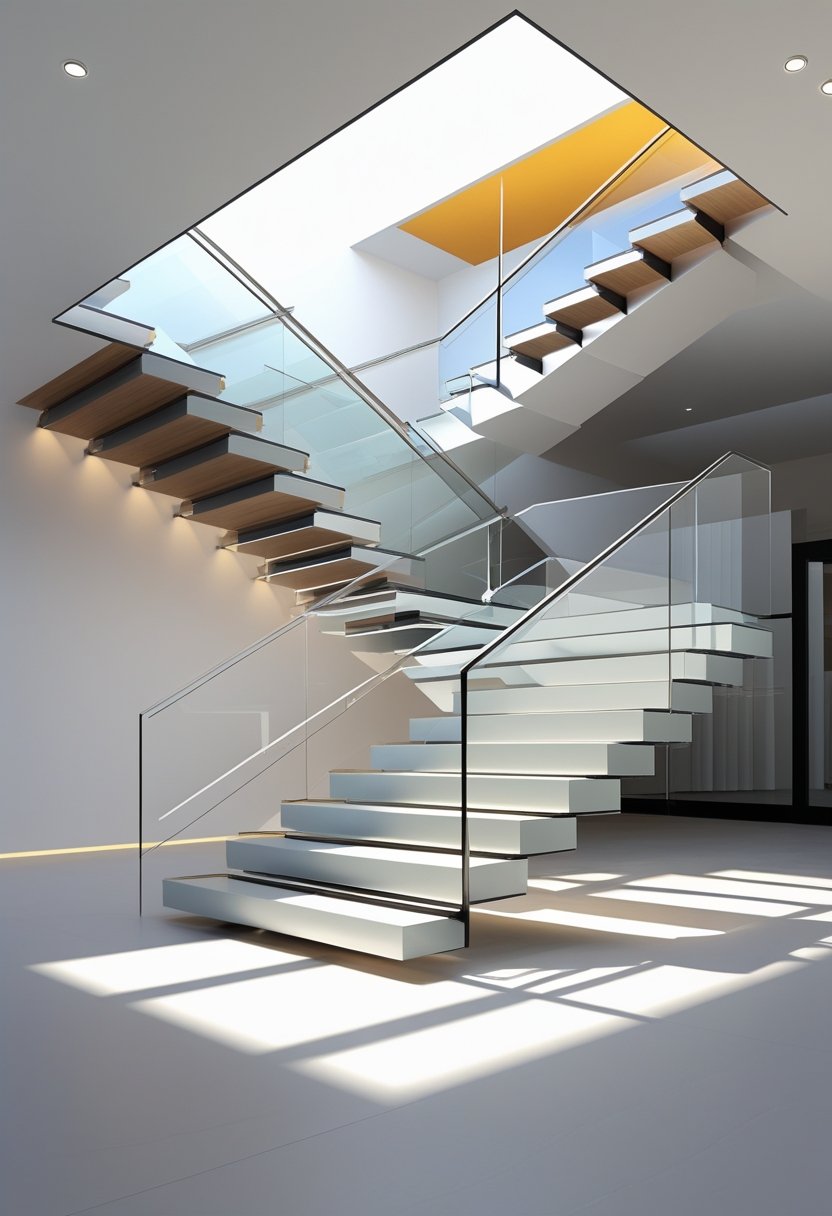 Effective staircase design balances [space efficiency](https://trionua.com/the-best-country-kitchen-design/), safety, and user comfort without sacrificing aesthetic appeal. Achieving this involves clever integration of storage, thoughtful safety measures, and strategic lighting to enhance both usability and style. ### Incorporating Storage and Multi-Use Features Staircases with built-in storage optimize limited space while maintaining a clean look. Drawers or cabinets can be integrated beneath steps or within the staircase structure, offering concealed storage for shoes, books, or household items. Multi-use features like seating nooks or display shelves along stair landings add practical functionality. Incorporating a stair runner can protect finishes and reduce noise, improving the stair’s usability while complementing wooden accents and geometric railings. ### Safety Considerations Without Compromising Style Safety elements are essential in modern staircases but need not disrupt design cohesion. Non-slip stair treads and well-fitted stair runners provide traction without detracting from clean lines or material choices. Railings with striking geometric patterns can be engineered for strength and height compliance, ensuring protection without bulkiness. Clear glass panels or open risers maintain openness and visibility while meeting safety codes when combined with secure handrails. ### Lighting Techniques for Practicality and Ambiance Lighting enhances stair safety and defines ambiance through layered approaches. LED strip lights installed beneath each step illuminate the tread clearly, reducing trip hazards and adding subtle warmth to wooden surfaces. Wall-mounted fixtures or recessed spotlights can highlight handrails and railings, emphasizing geometric designs. Combining functional lighting with softer accent lights creates a balanced environment that supports daily use and visual appeal. ## Sustainable and Eco-Friendly Staircase Approaches 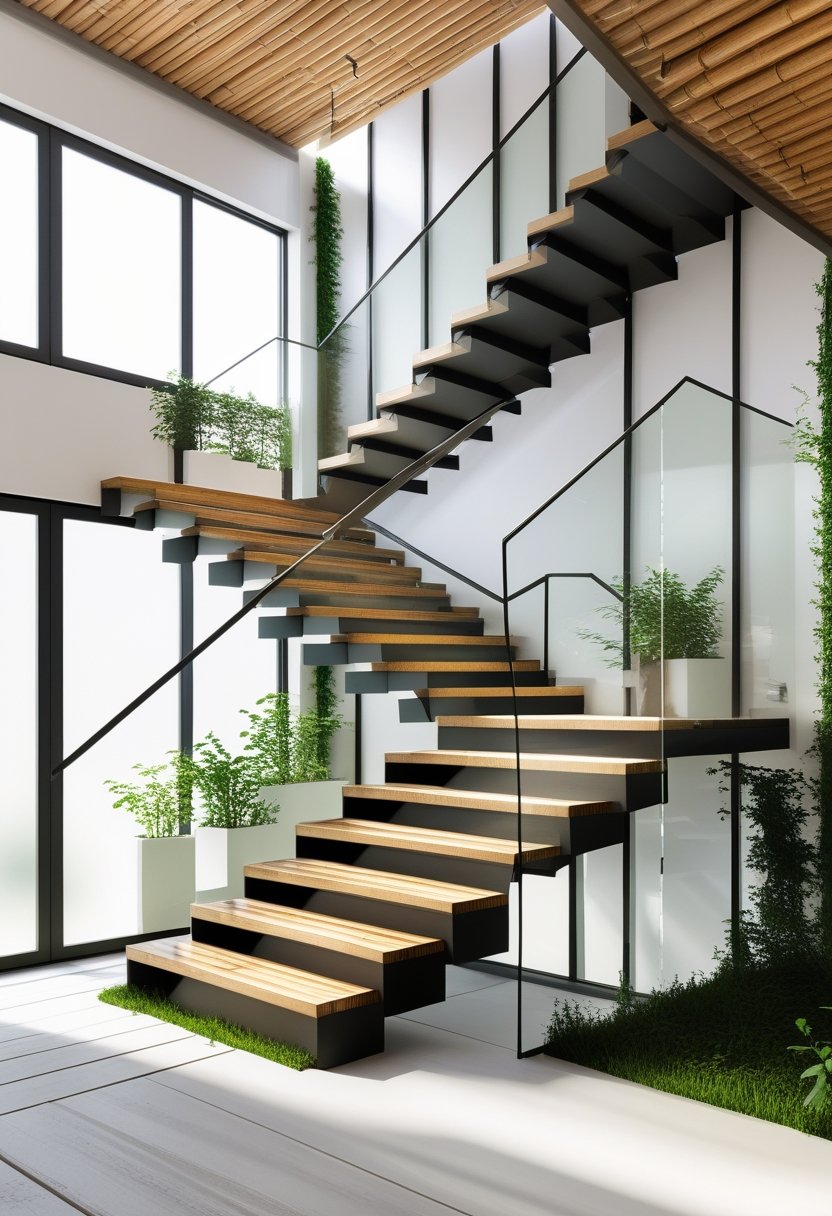 Staircase design today prioritizes materials and methods that reduce environmental impact without sacrificing durability or aesthetics. Wood, metal, and glass sourced responsibly can create structures that last and minimize waste. Efficiency in use of resources extends the lifespan and functionality of staircases. ### Selecting Sustainable Materials Using reclaimed wood for treads offers a low-impact alternative to newly harvested timber. This material retains warmth and natural beauty, enhancing geometric railing designs with organic texture. Bamboo is another option, known for rapid regrowth and strength, suitable for steps and accents. Recycled metals provide structure while reducing the need for virgin resources. They support modern, industrial looks and pair well with wooden elements to balance warmth and sleekness. Key considerations for selecting materials include: * Source certification (FSC, SFI) for wood * Durability to reduce replacement frequency * Low-impact processing and transport Attention to these factors helps ensure the staircase is both eco-friendly and visually striking. ### Designing for Energy Efficiency and Longevity Longevity in staircase design reduces waste and environmental toll. Using robust joinery methods and finishes enhances durability in daily use. Wood treatments that avoid toxic chemicals improve indoor air quality and maintain sustainable standards. Energy efficiency can extend beyond the structure itself. Incorporating natural or LED lighting integrated into the design reduces energy consumption. Thoughtful placement of open risers or glass panels allows light flow, creating a brighter and more inviting space without extra power use. Maintenance-friendly surfaces and modular elements streamline repairs and updates, encouraging longer use rather than full replacement.](https://trionua.com/wp-content/uploads/2025/07/v2-ykrja-aydrq-768x1122.jpg)