Bright & Playful Kids Room Storage | Pastel Nursery Ideas
Creating a bright and playful kids’ room that stays organized is achievable with thoughtful storage solutions and a cohesive color scheme. Using pastel-colored storage baskets, open cube shelves, and clearly labeled bins can keep toys, books, and art supplies orderly while adding a cheerful touch to the space. These elements not only enhance functionality but also contribute to a visually appealing environment that encourages children to participate in tidying up.

Incorporating whimsical nursery wall art, such as animal illustrations, adds personality and warmth without sacrificing practicality. The combination of minimalist floating shelves and neat storage files supports a Scandinavian-inspired design approach, which balances calm with joyful aesthetics. This setup demonstrates how to effectively merge playful décor with smart organization for both kids’ rooms and nurseries.
Bright & Playful Kids Room Storage Solutions
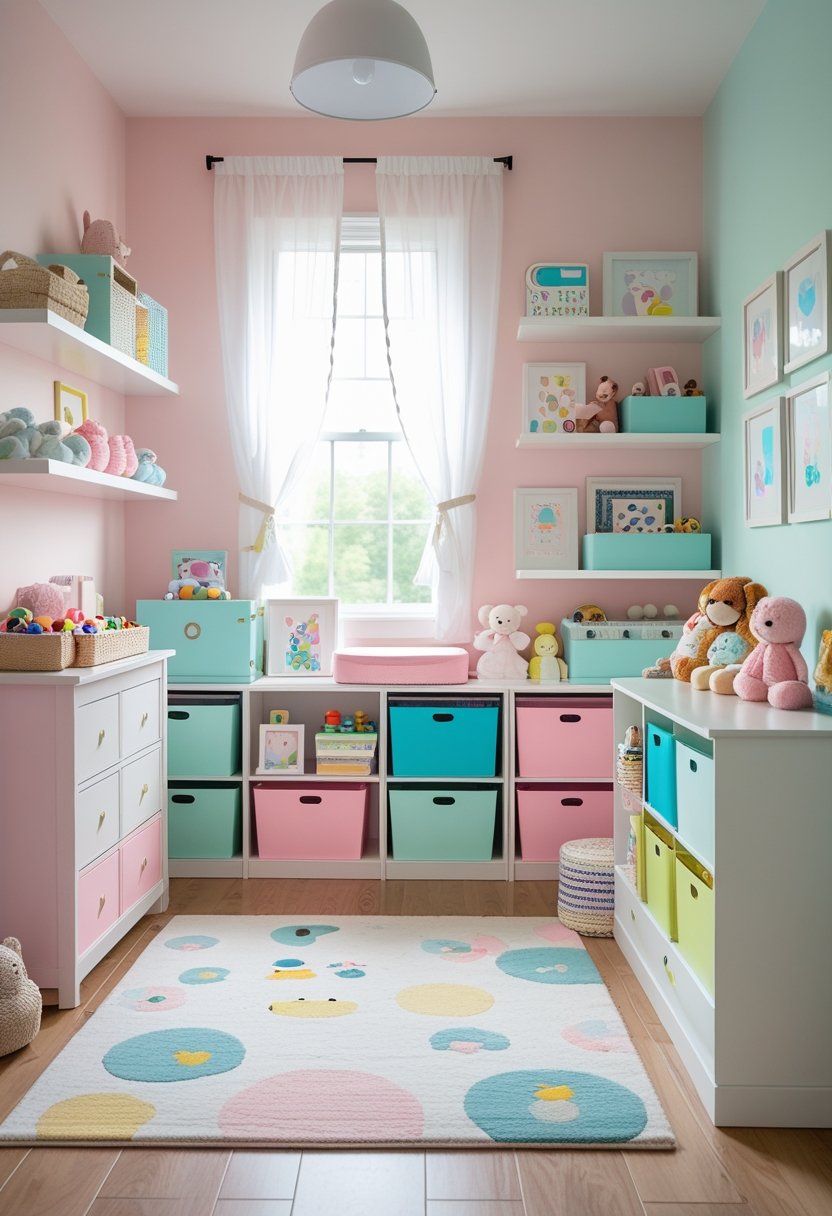
This design uses a pastel color palette and practical storage elements to keep toys, books, and supplies organized. It maximizes accessible storage with open shelving, labeled bins, and adaptable furniture that can grow with the child.
Pastel Cube Shelving Ideas
Cube shelving in soft pastel tones offers a structured yet inviting way to store children’s items. Cubes provide individual compartments that separate toys, books, and craft materials, reducing visual clutter.
Lightweight baskets or bins fit perfectly inside cubes for ease of access. The pastel shades create a cheerful atmosphere without overwhelming the space. Additionally, the open design encourages children to reach and return items independently.
This shelving works well against walls or as room dividers, making the most of limited space. Its simplicity complements various décor styles while providing ample vertical storage.
Labeled Bin Systems
Using clearly labeled bins helps maintain order and supports early organizational skills. Labels can include words, pictures, or both, suited to the child’s reading level.
Bins hold smaller toys, art supplies, or clothing accessories, keeping surfaces clear. Grouping similar items together reduces search time and helps parents and kids stay organized.
The combination of labels and pastel bin colors supports quick identification and adds color consistency. Bins that slide or lift out easily improve usability and safety for young children.
Modular and Adjustable Furniture
Furniture that adapts to changing needs adds value and longevity to a kid’s room. Modular units allow rearranging shelves, drawers, or surfaces to fit different storage purposes over time.
Adjustable heights accommodate children as they grow or switch activities from play to study. This flexibility ensures the furniture remains functional and comfortable at every stage.
Materials should be durable yet light enough for small hands to handle. Scandinavian design principles favor clean lines and muted pastels, enhancing the calming and playful nature of the space.
Colorful Organization in a Pastel Nursery
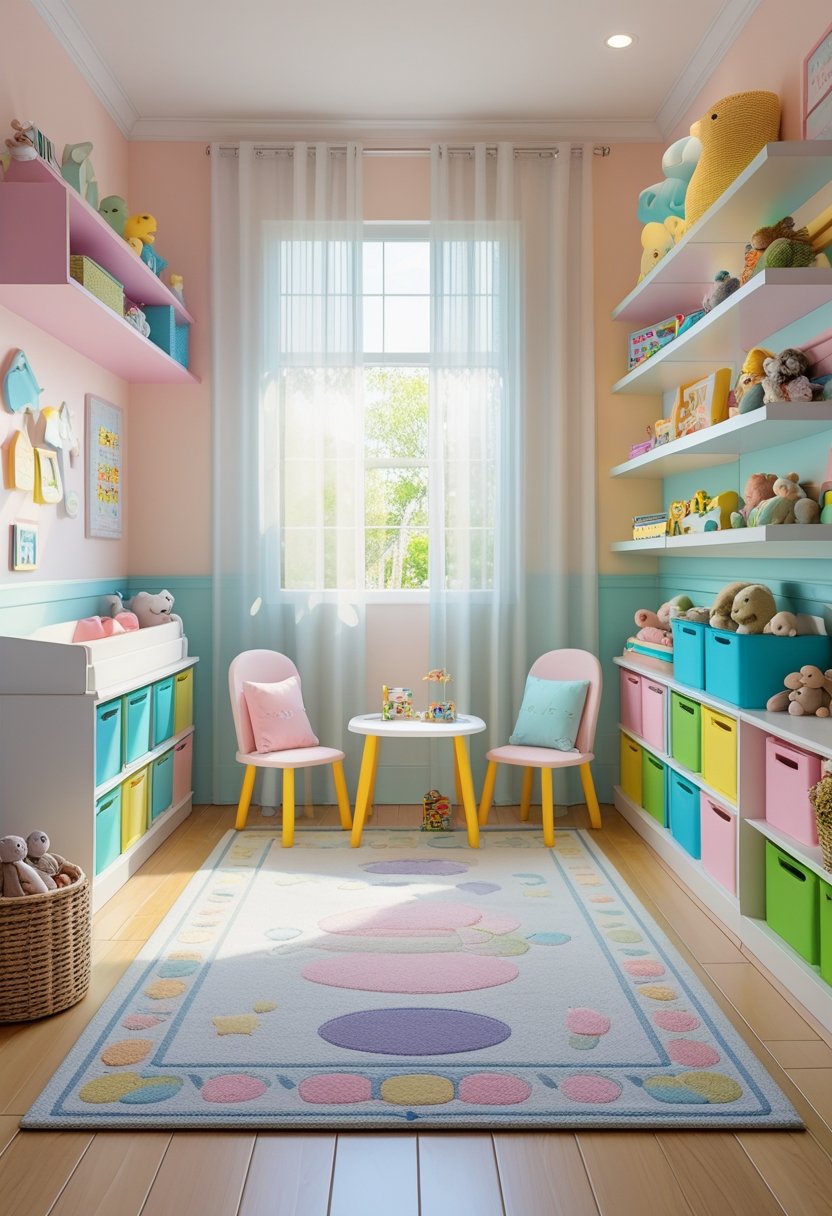
Creating a pastel nursery that is both vibrant and well-organized requires thoughtful use of storage solutions. Using cheerful pastel colors in storage options can enhance the room’s decor while keeping toys and essentials accessible. Balancing open and closed storage allows for effective decluttering and display.
Pastel Storage Baskets for Toys and Books
Pastel storage baskets are ideal for grouping toys and books in a nursery. They make organizing simple by categorizing items according to type or play activity. Baskets in soft pinks, blues, mint, and lavender add subtle color without overwhelming the space.
These baskets are lightweight and easy for children to use independently. Labels or icons on the baskets help young kids identify where items belong, fostering tidiness habits. Using a set of matching but varied pastel hues creates a cohesive, visually pleasing storage system.
Durable materials like woven fabric or plastic offer easy cleaning and long-lasting use. Baskets are versatile and can be placed on shelves, inside open furniture units, or on the floor as accessible toy bins.
Incorporating a Pastel Rainbow Theme
Integrating a pastel rainbow scheme can brighten the nursery while providing organization cues. Assigning each pastel shade—such as soft yellow, peach, or sky blue—to specific categories (e.g., books, art supplies, plush toys) creates an easy-to-follow system.
This color-coded approach helps parents and children quickly locate and return items. It also encourages proper storage habits by making organization visually intuitive.
Using multi-colored storage pieces like bins, boxes, or drawer fronts in pastel tones maintains a playful yet consistent design. Combining these with neutral furniture, such as white or light wood, ensures the color scheme feels fresh without being overly busy.
Open Storage Vs. Closed Storage Options
Open storage, like cube shelves or floating units, keeps toys and books visible, promoting easy access and encouraging children to engage with their belongings. It also allows caregivers to monitor clutter at a glance.
Closed storage solutions, including bins with lids or drawers, help conceal messier items, reducing visual clutter and protecting toys from dust. These options provide a cleaner look but may require more supervision to maintain order.
A mix of both is often most practical. Open shelves can house frequently used toys and books, while closed baskets or drawers manage smaller or less used items. This balance supports both accessibility and a tidy appearance in the nursery.
Creative Wall Art & Decor for Kids’ Rooms
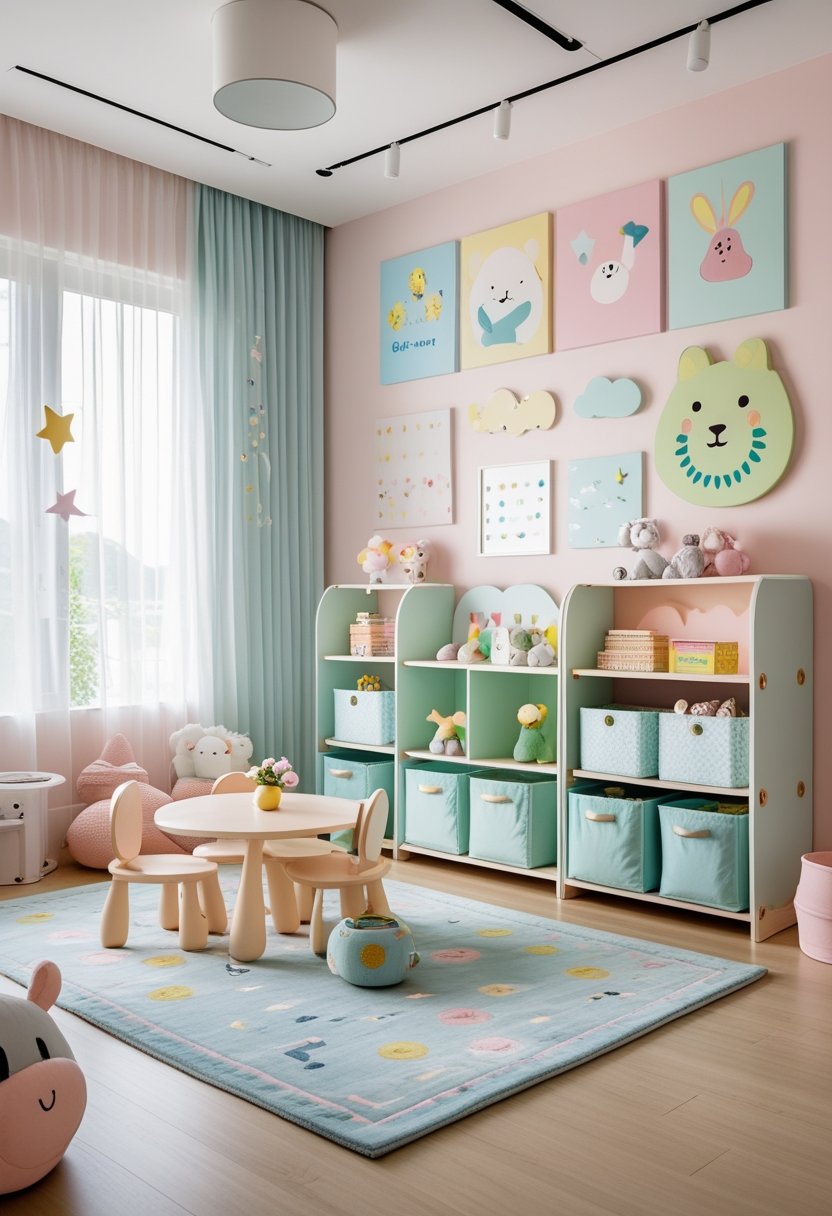
Adding visual interest to kids’ rooms can be achieved through fun, interactive, and personalized elements. These designs combine creativity with practicality, enhancing the room’s overall feel without crowding the space. Options range from playful animal motifs to customizable murals and personalized gallery walls.
Whimsical Animal Illustrations
Animal illustrations add charm and relatability to children’s rooms. Designs featuring llamas, hedgehogs, and other friendly creatures create a warm atmosphere. These prints often use soft, pastel colors such as muted yellows and blues, complementing nursery organization schemes while keeping the space light and inviting.
These illustrations work well framed or on canvas, providing an easy way to introduce color and personality. They often double as educational tools, sparking children’s curiosity about animals. Simplicity in design helps maintain calmness in the room, especially when paired with minimalist shelving or open cube storage.
Chalkboard Paint and Custom Murals
Chalkboard paint transforms walls or doors into writable, erasable art spaces. Applied in bold colors like deep blue or soft yellow, it invites creativity while maintaining a clean look. It also encourages kids to express themselves, practicing drawing or writing without damaging walls.
Custom murals add a unique flair, turning a plain wall into an immersive scene. These can be painted directly or designed as removable decals in pastel tones. Murals allow integration of thematic motifs such as rainbows or forest animals, enhancing the playful yet organized environment of a child’s room.
Gallery Walls for Kids’ Art
Gallery walls curate children’s artwork and favorite prints, making their creativity the focal point. Using uniform frames in pastel yellows and blues ties the display to the room’s color palette. Frames can be mixed sizes but arranged in balanced patterns to avoid visual clutter.
This setup encourages kids to contribute new pieces, fostering pride and ownership over their space. It also provides a dynamic, changeable décor option that grows with the child. Gallery walls work best on neutral or lightly colored walls to highlight the vibrant art and maintain a cheerful but orderly atmosphere.
Functional Layouts for Clutter-Free Playrooms
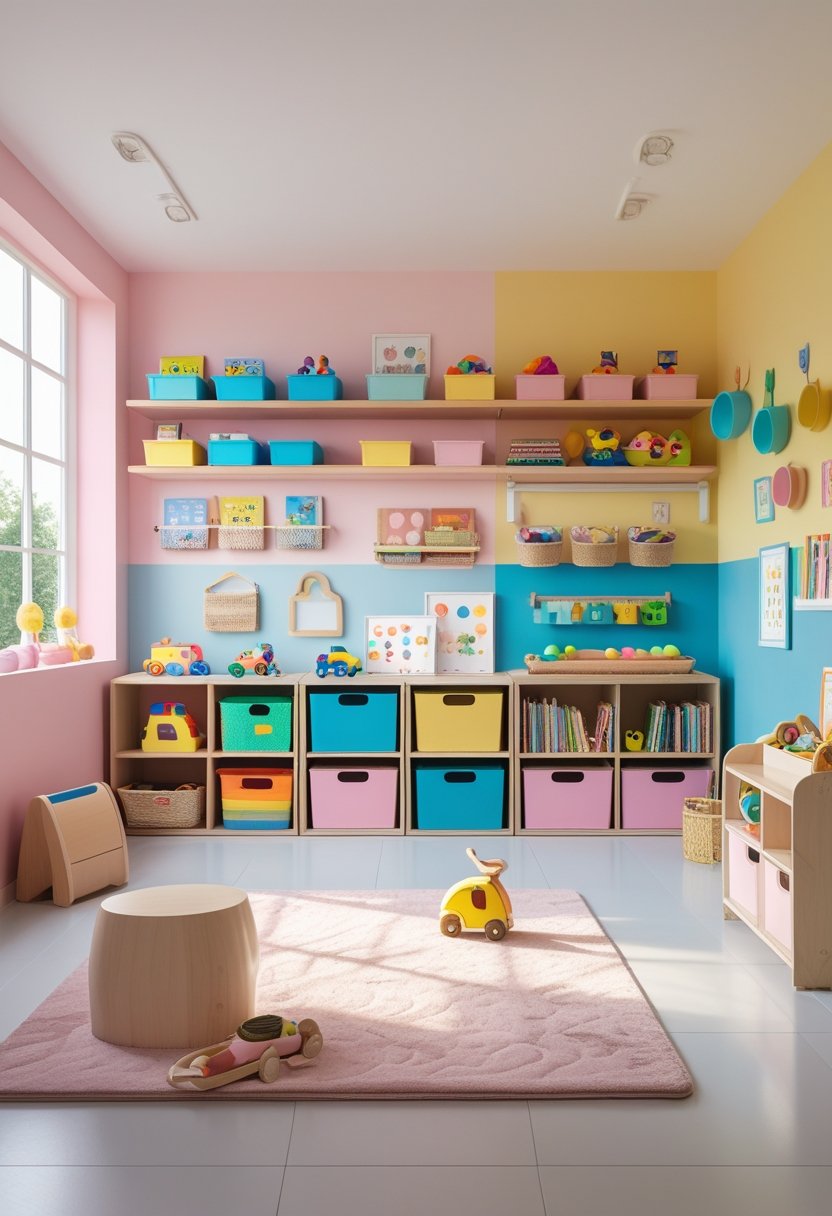
Efficient layouts prioritize toy accessibility, clear zones for play and storage, and safety. Smart use of furniture and floor space enhances organization without overcrowding, while secure installations keep children safe during active play.
Strategic Furniture Placement
Placing furniture intentionally defines zones for different activities such as reading, crafting, and playing. Open cube shelves work well against walls, giving easy access to bins while leaving central areas open for free movement.
Low-profile furniture keeps sightlines clear, helping adults supervise. Multi-functional pieces—like storage benches—combine seating and organization to reduce clutter. Arranging storage close to frequently used items minimizes mess and encourages children to tidy up independently.
Maximizing Floor Space
Open floor space supports active play and adaptability. Using vertical storage with wall-mounted shelves clears the floor of bins and toys. Stackable or modular storage units can be adjusted as the child’s needs evolve.
Clear floor areas allow larger toys or play mats without feeling cramped. Folding furniture or stackable chairs provide seating when needed and can be stowed away later. Keeping pathways unobstructed aids in maintaining a clean, navigable playroom.
Safe Anchoring and Accessibility
Securing furniture to walls prevents tipping, a crucial safety measure in homes with young children. Heavy bookshelves, storage units, and floating shelves should have proper anchors to avoid accidents.
Accessibility means placing everyday toys and books within a child’s reach while reserving high shelves for less used or hazardous items. Rounded furniture edges and stable bases reduce injury risk during energetic play. Ensuring these safety factors helps create both an organized and secure environment.
Inspiring Reading Nooks and Creative Corners
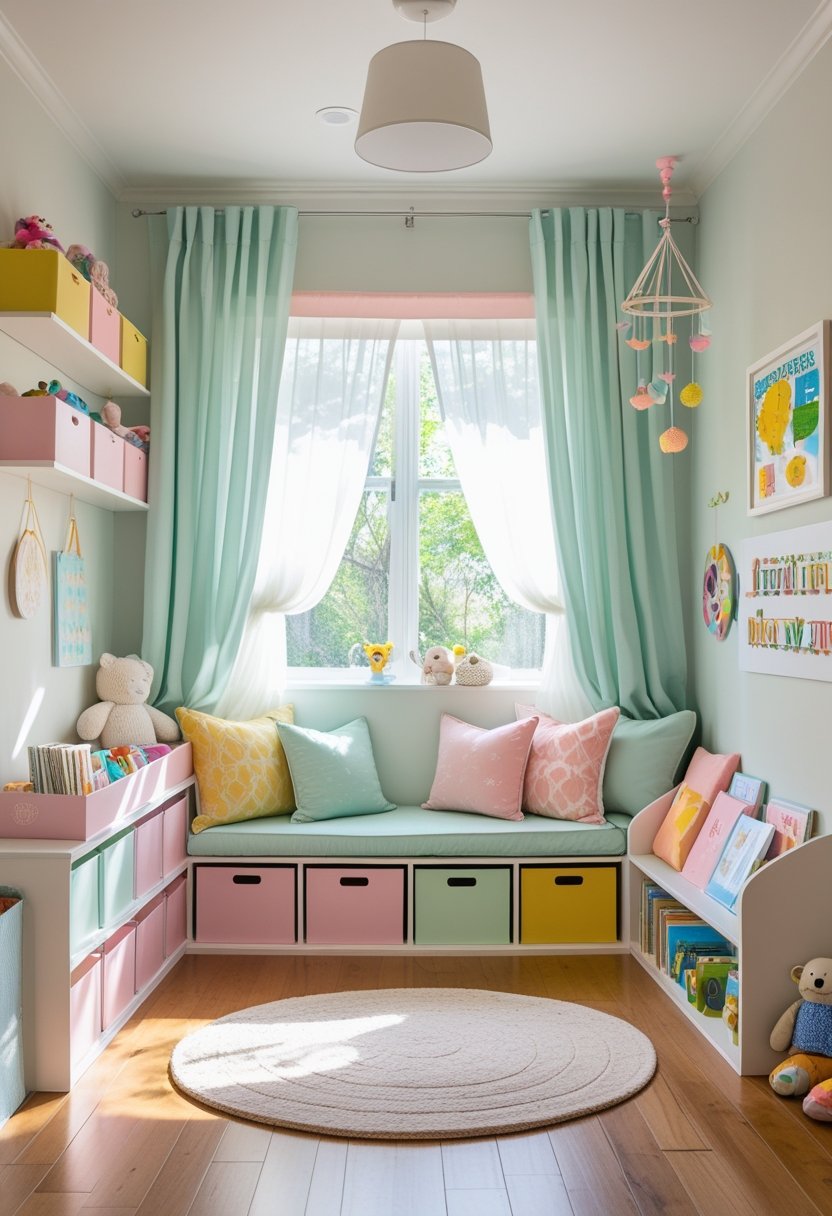
Creating a dedicated space for reading and play enriches a child’s room with both function and charm. Thoughtful furniture placement, organized shelving, and flexible use of space ensure this area is inviting and practical. Attention to color and storage improves usability and encourages independent use.
Pastel Reading Nook Designs
Pastel colors soften the atmosphere, making reading corners calming and inviting. Incorporating plush seating like a small armchair or floor cushions in pale pinks, blues, and greens adds comfort. Lightweight canopies or fabric drapes enhance coziness and create a semi-private retreat for quiet time.
Open cube storage works well here, using pastel bins to hold books and small toys. Keeping everything accessible encourages children to choose their own books, fostering independence. Adding a small side table or low shelf provides space for favorite items without cluttering the nook.
Floating Shelves for Book Display
Floating shelves maximize vertical space and keep surfaces clear. Installing them at child-friendly heights allows easy access to books and decorative items. Shelves painted in light pastel tones integrate seamlessly with the room’s palette, maintaining visual harmony.
Organizing books facing outward on floating shelves highlights covers, attracting children to explore new titles. Combining open display with some bins below for organization balances aesthetics with function. These shelves also accommodate small plants or figurines, adding personality without overwhelming the area.
Multi-Use Art and Play Spaces
A flexible corner combines creative activities with reading in one functional zone. Use modular furniture, such as stackable cubes or adjustable desks, that adapts to drawing, playing, and reading. Pastel storage boxes keep art supplies orderly, preventing mess while remaining within easy reach.
Integrating toy storage with bookcases helps maintain tidiness. Wall-mounted pegboards or clipboards can hold children’s artwork, making the space feel personalized and dynamic. This setup encourages shifting between quiet reading and imaginative play without needing distinct rooms.
Integrating Storage in Shared and Multi-Use Spaces
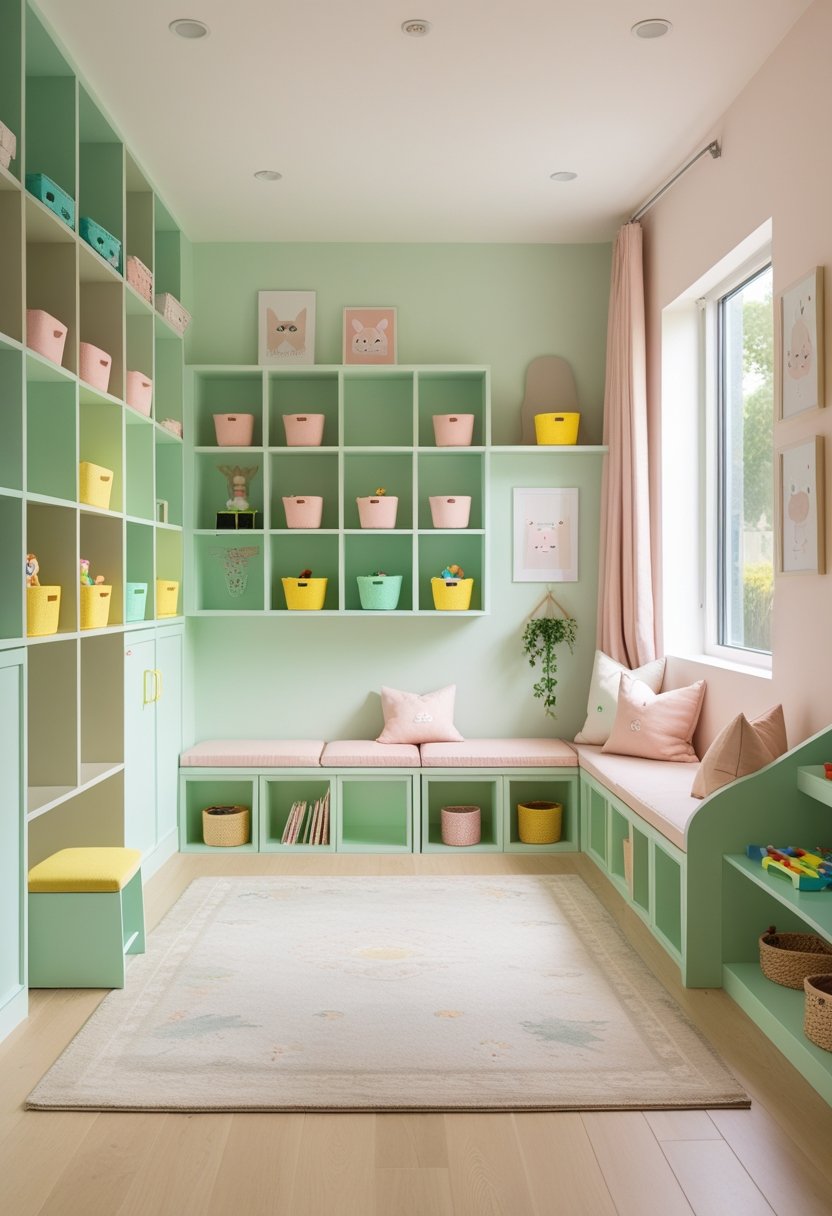
Maximizing functionality in shared and multi-use areas requires smart storage solutions that maintain order without compromising style. Practical choices can keep toys and supplies organized while fitting the overall home environment. Clear boundaries and unified design help balance play and everyday living.
Kids’ Storage in the Living Room
Incorporating kids’ storage in the living room means choosing pieces that blend with adult spaces. Low-profile storage units, such as cube shelves with pastel or neutral bins, provide accessible spots for toys and books. Using closed containers prevents visual clutter while open sections encourage independent tidying by children.
Multipurpose furniture, like ottomans with hidden storage or benches with drawers, keeps toys out of sight. Labels on bins simplify cleanup and teach responsibility. The storage should be durable and easy to clean, given the high-traffic nature of living rooms.
Cohesive Home Organization Strategies
Consistency across rooms supports smoother organization throughout the house. Coordinating storage styles—such as matching baskets or color schemes—creates a visually unified home environment. This aids quick identification of where items belong and reduces confusion.
Implementing modular storage units allows flexibility for changing needs. Adjustable dividers and stackable bins can be customized for various types of toys and supplies. Clear labeling systems and consistent storage locations make routines easier for both kids and adults.
Blending Play and Everyday Living Areas
Creating harmony between play and daily living spaces demands storage that supports both functions without overwhelming either area. Using subtle pastel colors and minimalist designs helps integrate playroom elements into main living areas.
Strategically placed floating shelves or wall-mounted units save floor space and maintain openness. Defining zones with room dividers or rugs can make play areas distinct yet connected, promoting a tidy, calm atmosphere throughout.

Ana Luisa
Explore in-depth biographies, net worth insights, and exclusive updates on your favorite singers at Trionua.com. Discover the journeys, achievements, and latest news about music’s biggest stars.