A well-styled coffee corner in the kitchen combines both function and aesthetic to create a dedicated space that simplifies the daily coffee ritual. It involves choosing a practical layout, selecting essential equipment, and incorporating thoughtful storage and decor to keep everything organized and visually appealing. This approach turns a simple counter area into a cozy and efficient spot for brewing coffee.
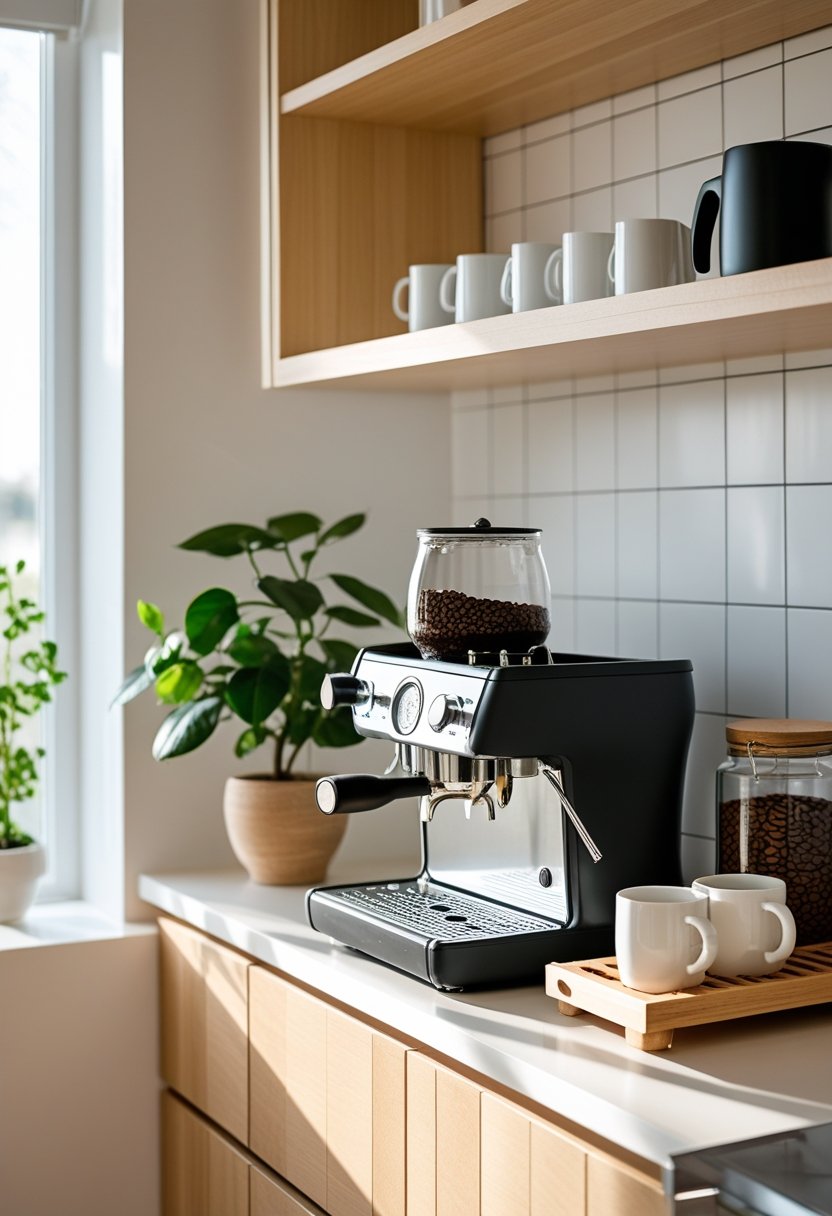
Attention to details like lighting, countertop space, and accessible beverage accessories enhances the overall experience. By tailoring the setup to fit the kitchen’s size and the user’s preferences, the coffee corner becomes a seamless part of the room rather than an afterthought. Whether the space is small or expansive, thoughtful styling can elevate the morning routine.
Selecting the Ideal Coffee Corner Location
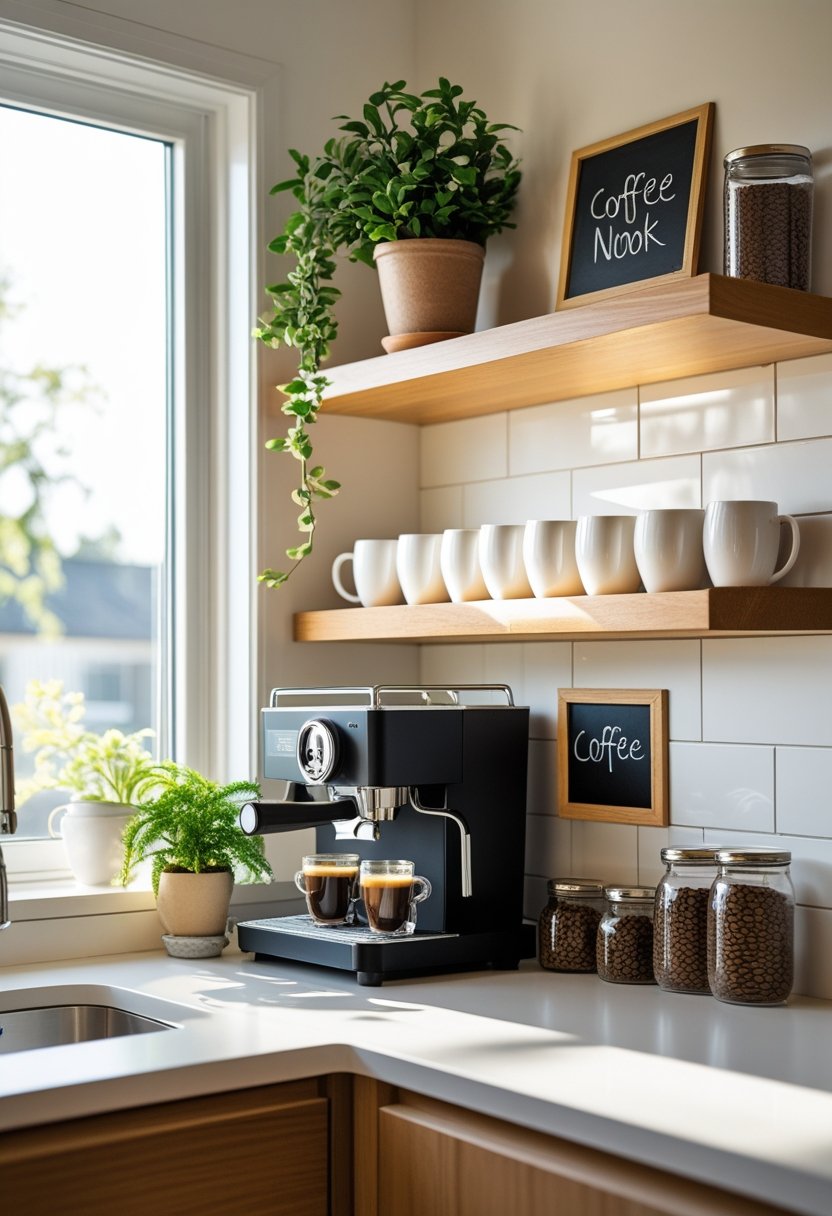
Finding the best spot for a coffee corner involves evaluating the kitchen’s layout, deciding on a fixed or mobile setup, and considering how the coffee nook fits especially in open or smaller kitchens. Location affects functionality, ease of use, and how well the coffee station integrates with daily routines.
Assessing Kitchen Layout and Space
A successful coffee nook depends on available space and kitchen flow. The ideal location offers easy access to power outlets and nearby water sources if needed. Counters near the breakfast nook or an unused corner of the kitchen work well.
He or she should avoid high-traffic zones to reduce congestion during busy times. Vertical storage like floating shelves helps maximize small areas without cluttering countertops. Measuring the area beforehand ensures the coffee station fits comfortably, allowing room for brewing equipment, mugs, and storage.
Choosing Between Fixed and Mobile Setups
Deciding if the coffee corner remains stationary or mobile affects flexibility. A fixed setup offers a permanent home for equipment like espresso machines and grinders, enhancing stability and aesthetics.
A rolling cart or coffee cart provides mobility and can move to accommodate guests or free up counter space temporarily. This option suits those with limited kitchen space or those who prefer a compact coffee station that can be stored when not in use. Mobile setups often include additional storage for supplies and cups, making them practical without sacrificing style.
Integrating Coffee Corners into Open or Small Kitchens
Open kitchens require the coffee nook to blend with surrounding areas, such as the living or dining room. Using cohesive décor and compact furniture keeps the station visually connected to the home’s overall design.
In small kitchens, space-saving coffee corner ideas like slim tables, wall-mounted shelves, or countertop corners preserve room for other tasks. Combining a coffee nook with the breakfast nook maximizes usability by creating a dual-purpose space for casual dining and coffee preparation. Using light colors and minimal decor helps the area feel inviting, not crowded.
Design Themes and Style Concepts
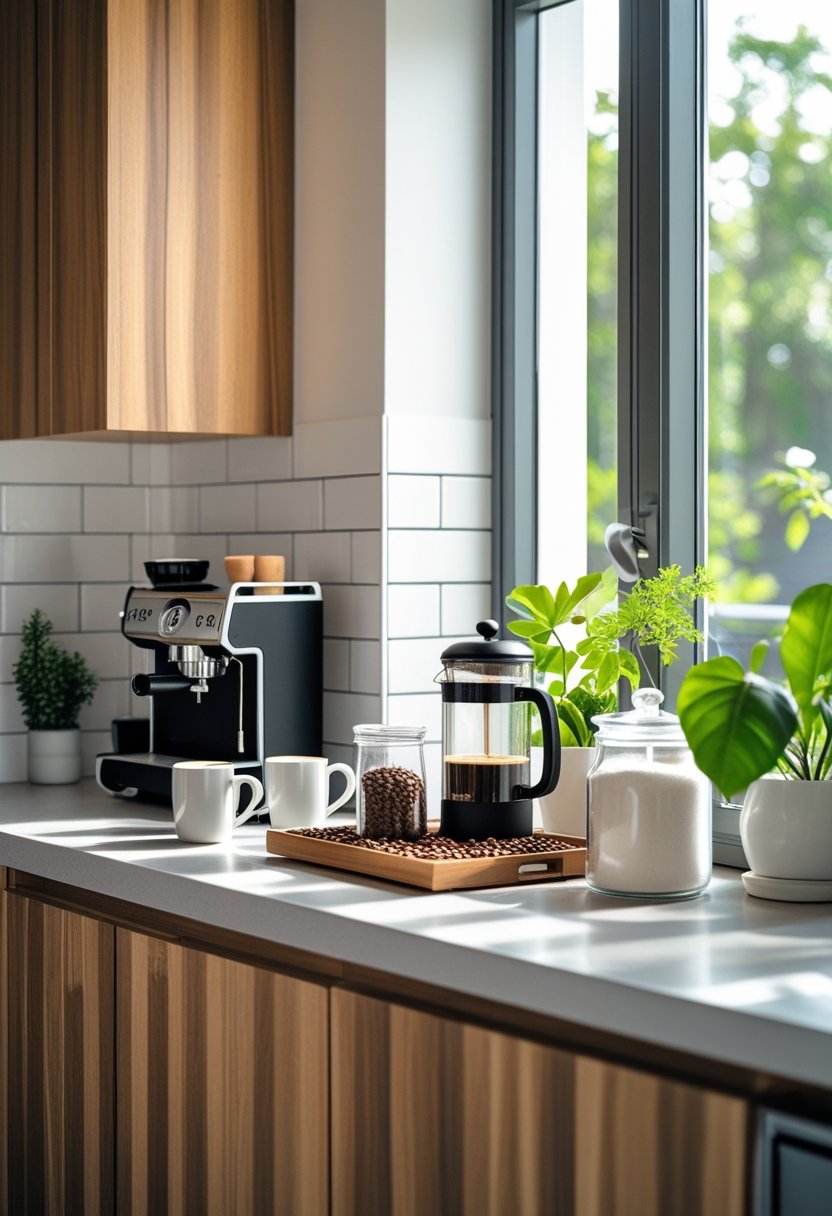
Creating a coffee corner involves selecting elements that align with your personal style and kitchen layout. Choices like materials, color palettes, and furniture define the atmosphere, while functionality remains central. Whether sleek or cozy, the design should complement the existing kitchen environment.
Modern Minimalist Coffee Stations
Modern minimalist coffee stations emphasize clean lines and uncluttered spaces. They often feature smooth surfaces like marble countertops or white lacquer cabinets paired with stainless steel appliances. Open shelving or simple cabinetry with hidden storage keeps the look streamlined.
Functional accessories are essential here: a compact espresso machine, a built-in coffee grinder, and minimal mugs and utensils. Neutral color palettes, such as grays, blacks, and whites, dominate to enhance simplicity. Lighting is subtle but focused, typically using under-cabinet LEDs to illuminate work areas without overpowering the space.
Rustic and Farmhouse Coffee Nooks
Rustic or farmhouse coffee nooks rely on warmth and texture to create an inviting setting. Reclaimed wood shelves or butcher block countertops bring character and durability. The furniture often includes vintage or distressed pieces to emphasize authenticity.
Decor includes mason jars for coffee beans, enamel mugs, and antique-style signage. Soft, natural colors like earthy browns, cream, and muted greens complement the wood tones. Accessories such as a classic manual coffee grinder or a French press add to the nostalgic feel. This style pairs well with open shelving to display ceramics or coffee paraphernalia openly.
Industrial and Urban Coffee Corners
Industrial coffee corners combine raw materials and urban influences for an edgy look. Elements like metal shelving, exposed pipes, and concrete or dark wood surfaces set the tone. A butcher block countertop or rugged reclaimed wood contrasts well with black or gunmetal finishes.
Accessories in this style tend to be utilitarian yet stylish, such as stainless steel coffee machines and wire baskets for storage. Lighting often features exposed bulbs or metal fixtures. This design suits small spaces by maximizing vertical storage and turning functional hardware into decorative accents.
Glamorous and Luxe Coffee Bar Setups
Glamorous coffee bars focus on elegance and high-end finishes. Marble countertops provide a clean and luxurious surface ideal for accessories and coffee machines. Details like gold or brass accents on taps, handles, and shelving elevate the style.
Furniture is often sleek and polished, with glass or mirrored surfaces. Storage solutions are hidden or beautifully integrated, keeping the space elegant without clutter. Plush bar stools or a dedicated seating area can enhance the indulgence of the experience. This style is perfect for those who want their coffee corner to double as a statement piece.
Choosing Equipment and Coffee Makers
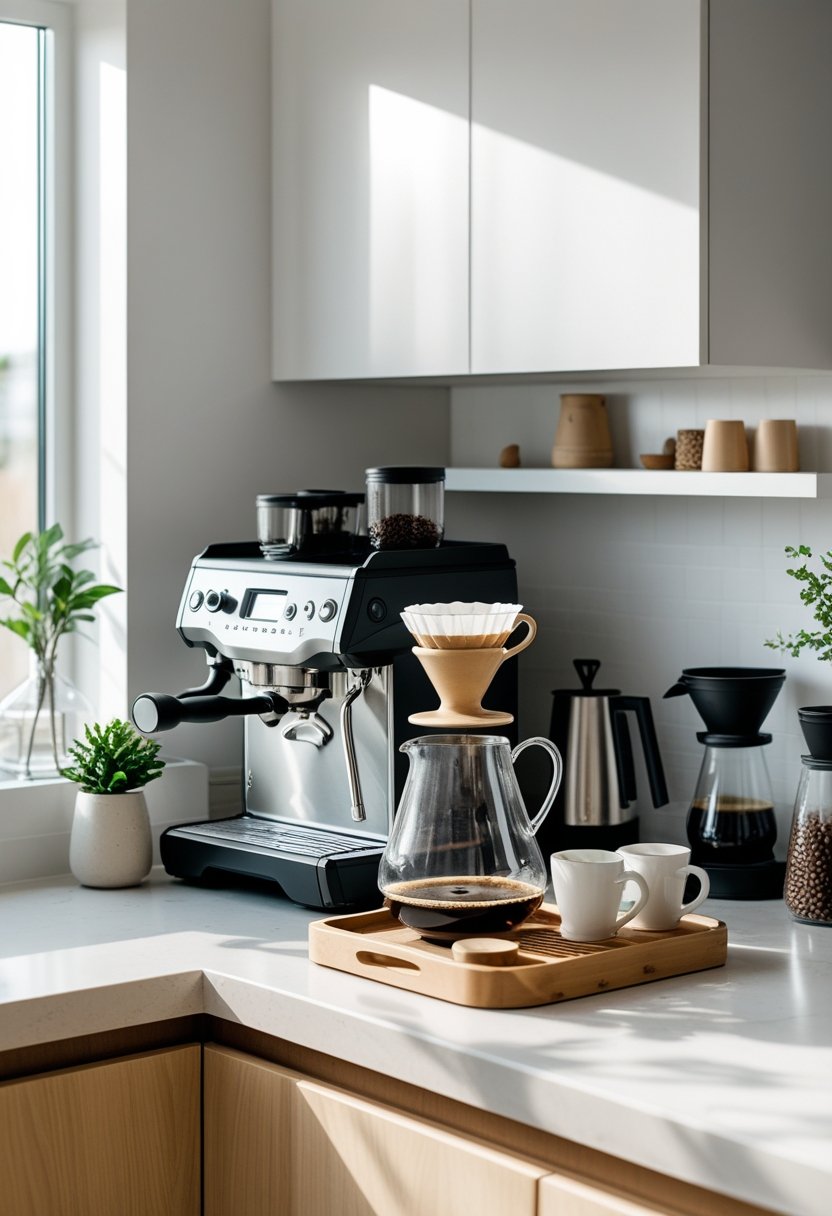
A well-styled coffee corner depends on choosing equipment that fits both the space and the user’s brewing preferences. From simple drip machines to specialized espresso makers, each option influences the style and function of the setup. Complementing the coffee maker with the right accessories ensures a seamless, enjoyable experience.
Selecting the Right Coffee Machine
When selecting a coffee maker, size and brewing style are primary considerations. Drip coffee machines are popular for convenience and capacity, offering multiple cup sizes and programmable features. For small spaces, compact pod-based machines like the Keurig K-Elite provide quick, customizable brews without clutter.
Energy efficiency and ease of cleaning matter for daily use. Look for machines with removable parts and auto-shutoff features. Models with adjustable brew strength and timers add flexibility. White, black, or stainless steel finishes suit most kitchen styles, allowing the machine to blend or stand out as a focal point.
Espresso Machines and French Press Options
For coffee enthusiasts craving deeper flavor, espresso machines bring professional-style brewing home. Automatic or semi-automatic models produce consistent shots and often integrate milk frothers for lattes and cappuccinos. Manual machines require skill but offer control over every extraction step.
French presses provide a simple, hands-on alternative for rich, full-bodied coffee. They require no electricity and are easy to clean, fitting well in minimalist or rustic coffee corners. Quality options have durable glass or stainless steel bodies, and sizes range from single-serve to multi-cup.
Essential Coffee Accessories and Tools
Completing the coffee station requires practical accessories for preparation and presentation. A milk frother enhances espresso drinks, while quality grinders maintain bean freshness. Other essentials include stainless steel spoons, reusable filters, and airtight storage containers.
Organizers like tiered trays or wall-mounted racks help keep mugs, syrups, and coffee supplies accessible and neat. Adding a small waste bin or disposal system simplifies cleaning. Choosing accessories that match the corner’s style reinforces the overall design while supporting an efficient workflow.
Optimizing Storage and Organization
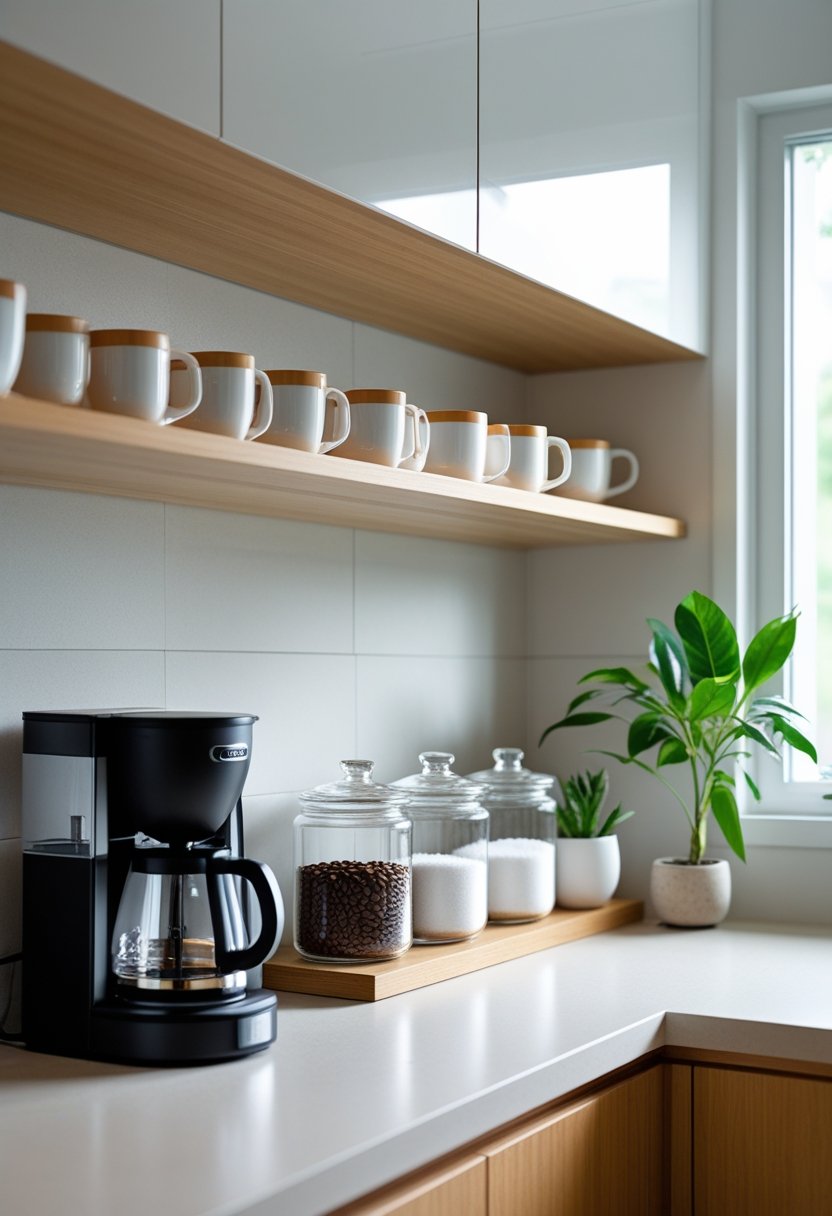
Maximizing space and accessibility in a kitchen coffee corner is essential for a smooth routine. Thoughtful use of vertical and hidden storage keeps essentials within reach while maintaining a clean surface. Smart design allows for efficient use of every inch without clutter.
Floating Shelves and Wall-Mounted Racks
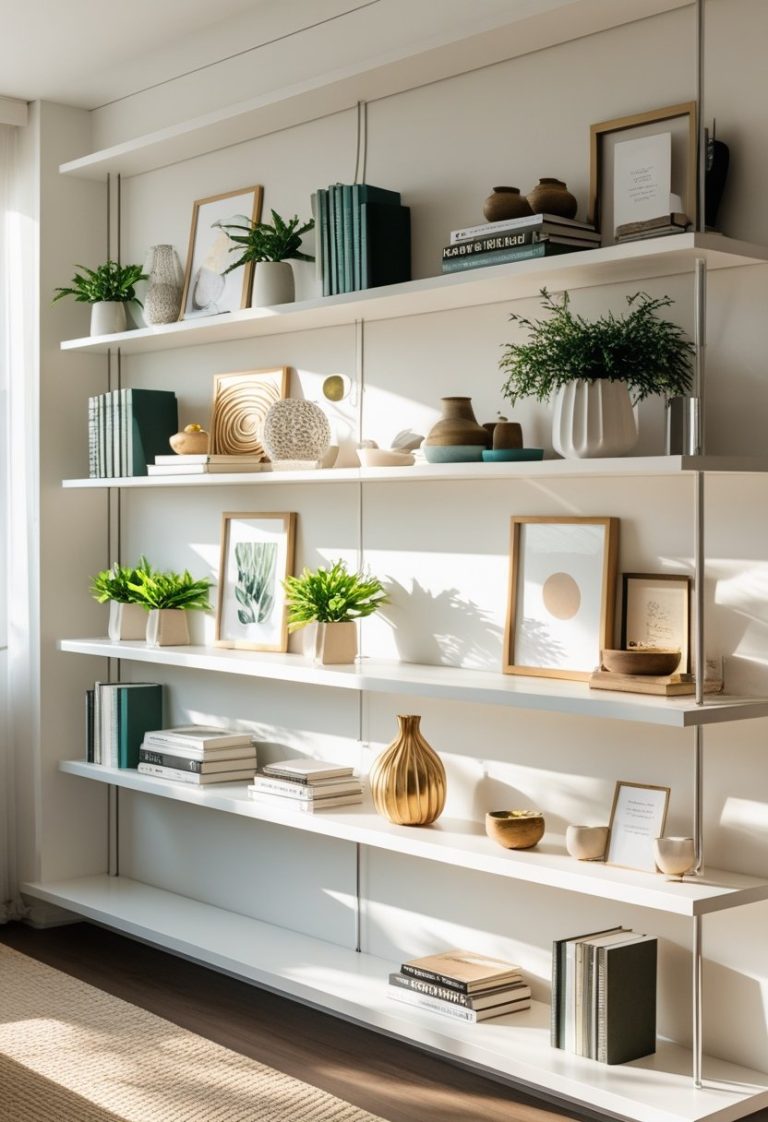
Floating shelves offer versatile, space-saving storage by utilizing wall space above the counter. They are ideal for storing coffee cups, specialty glassware, and jars of coffee beans or sugar. Installing a wall-mounted mug rack underneath these shelves keeps mugs handy and organized, preventing countertop clutter.
These shelves also allow for decorative touches, such as small plants or framed coffee quotes, blending functionality with style. Choosing sturdy materials ensures they hold the weight of heavy mugs and containers. Adjustable or staggered shelving can accommodate items of different heights, making it easier to customize storage.
Cabinetry and Repurposed Furniture
Built-in cabinetry or repurposed furniture can transform a coffee corner into a well-defined station. A cabinet with shelves and drawers can store a coffee maker, grinder, filters, and various supplies neatly out of sight. Using a repurposed dresser or buffet adds vintage charm and additional storage space.
Drawers and closed cabinets reduce visual clutter and protect supplies from dust. Labeled containers inside help maintain order and quick access. If the cabinetry includes a pull-out shelf or slide-out tray, it boosts convenience by allowing easy appliance use without moving items.
Creative Solutions for Small Spaces
In tight kitchens, every inch matters. Narrow rolling carts can act as portable coffee stations and tuck away when not in use. Magnetic strips on walls can hold metal tools like spoons and scoops. Corner shelves specifically designed for awkward angles optimize unused space.
Wall hooks for hanging mugs free up shelf room while making mugs easy to grab. Compact containers and stackable jars make the most of limited cabinet space. Using vertical storage and multi-purpose furniture ensures that coffee supplies remain organized without overtaking the kitchen.
Personalizing Decor and Ambience
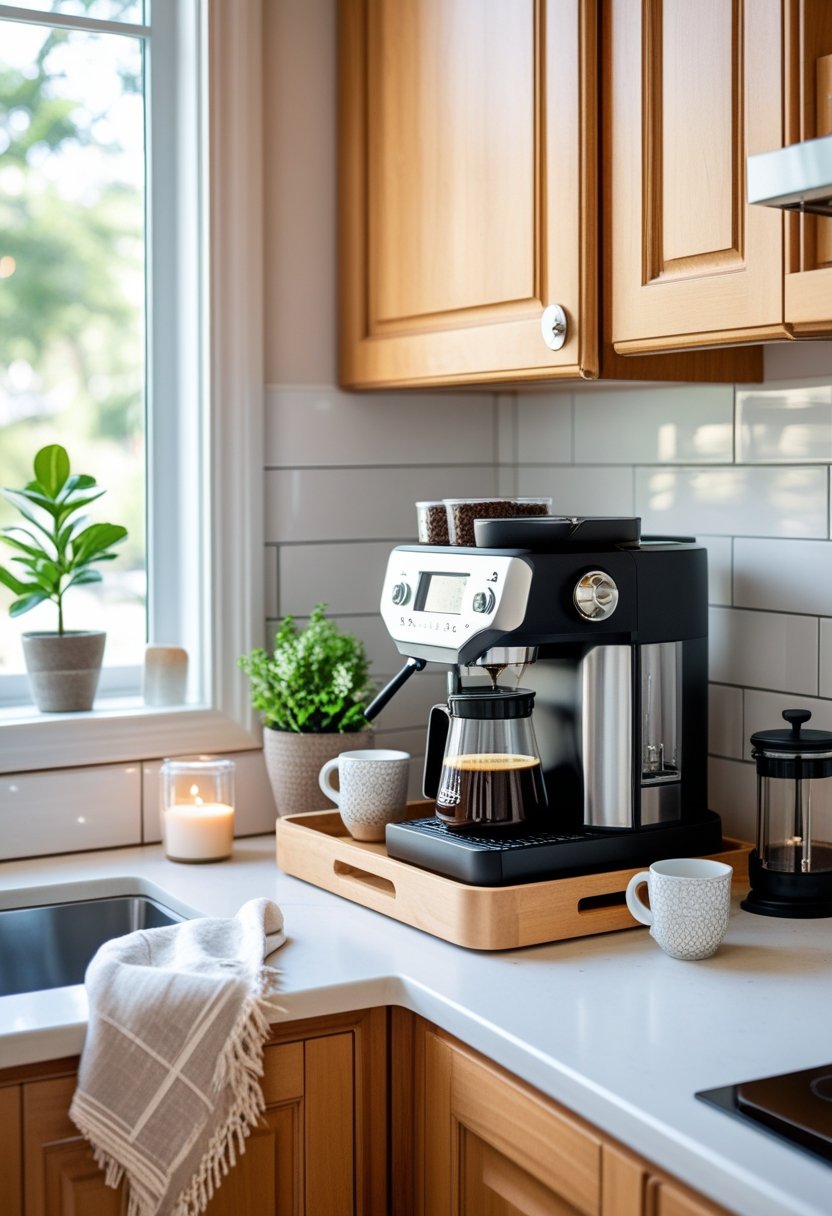
A well-styled coffee corner balances practicality with personal expression. Key elements include selecting decorative yet useful items, thoughtful lighting choices, and integrating complementary beverage options to enhance both function and atmosphere.
Curating Functional Decorative Elements
Choosing the right accessories is crucial for a coffee bar that is both attractive and efficient. Essential items like quality coffee grinders, sleek espresso machines, and sturdy storage containers set the foundation. Adding decorative jars for beans or pods offers visual interest while keeping supplies organized.
Incorporating items like reusable cups, stylish trays, and small planters can add personality without clutter. Functional decor should reflect daily habits; for example, a coffee and breakfast nook might include a compact toaster or a milk frother readily accessible.
Using materials like wood, metal, or ceramic can unify the look. This approach ensures that every item serves a purpose while contributing to a cohesive, inviting space.
Integrating Artwork and Lighting
Artwork and lighting define the ambience and mood of the coffee corner. Framed prints or coffee-themed posters introduce character without overwhelming the space. Choosing minimal or vintage styles can emphasize the aesthetic—whether modern cafecore or retro charm.
Lighting should be layered. A combination of overhead lights and task lighting, such as adjustable sconces or small pendant lamps, enhances visibility and highlights key design features. Warm LED bulbs create a cozy glow that makes early mornings more inviting.
Natural light is ideal near windows but can be supplemented with dimmable options to adjust the setting throughout the day. Good lighting also showcases the coffee bar’s organization and decorative elements.
Combining Coffee and Tea or Other Features
Expanding a coffee corner to include tea or breakfast options adds versatility and appeal. A dedicated coffee and tea combo station allows for multiple drink preferences without crowding the area. It requires separate storage for tea tins, kettles, and infusers alongside coffee essentials.
Incorporating a small breakfast nook nearby encourages a multi-functional space where coffee preparation meets light meals. Items such as a compact toaster, a set of mugs, or a sugar bowl can be arranged conveniently for quick access.
This blend of features transforms a simple coffee corner into a fuller experience, accommodating different tastes and routines while maintaining a clean, organized design.
Maintaining and Evolving Your Coffee Corner
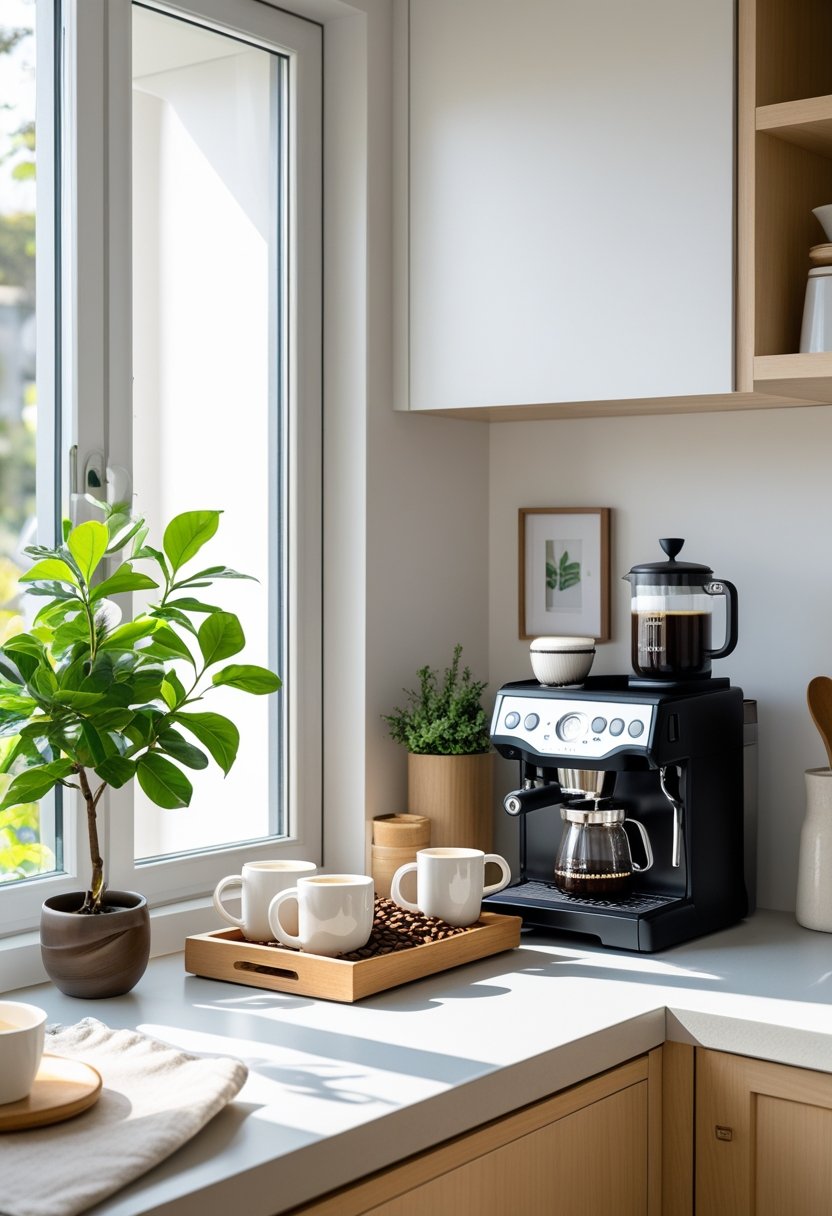
A well-kept coffee corner requires regular attention to both organization and style. Keeping supplies orderly ensures quick access and smooth brewing, while refreshing design elements keeps the space inviting and aligned with seasonal moods or trends.
Keeping Supplies Organized
Organization is essential for a compact coffee station. The key is to arrange coffee beans, filters, mugs, and tools in clearly designated, easy-to-reach spots. Using labeled jars or containers helps protect beans from moisture and keeps everything visible.
Shelving or small baskets can maximize vertical space, especially in limited areas. For example:
| Item | Storage Suggestion |
|---|---|
| Coffee beans | Airtight, clear containers |
| Filters | Small baskets or drawer organizers |
| Mugs | Hanging hooks or mug racks |
| Tools (spoons, tampers) | Drawer trays or countertop holders |
Regularly discarding expired supplies prevents clutter. Keeping a cleaning kit handy encourages maintaining the machine’s performance and hygiene.
Refreshing the Design Seasonally
Altering your coffee corner’s decor according to the season engages the senses and renews the space without major changes. Swapping out small accents like textiles, wall art, or decorative trays can reflect seasonal colors or themes such as warm tones for fall or light hues for spring.
Lighting adjustments, such as adding softer bulbs or string lights, enhance ambience. Incorporating fresh elements like greenery or seasonal mugs can also make the station feel new.
This approach requires minimal effort but adds a dynamic quality, making the coffee corner a continually enjoyable part of the kitchen. It reflects both personal style and the evolving atmosphere of the home.

Ana Luisa
Explore in-depth biographies, net worth insights, and exclusive updates on your favorite singers at Trionua.com. Discover the journeys, achievements, and latest news about music’s biggest stars.