
Modern Carport Design Ideas to Elevate Your Home’s Style
A modern carport can do more than just protect vehicles—it adds architectural interest and enhances a home’s overall style. Combining clean lines, durable materials, and thoughtful design, these carports offer a practical solution that aligns with contemporary aesthetics.
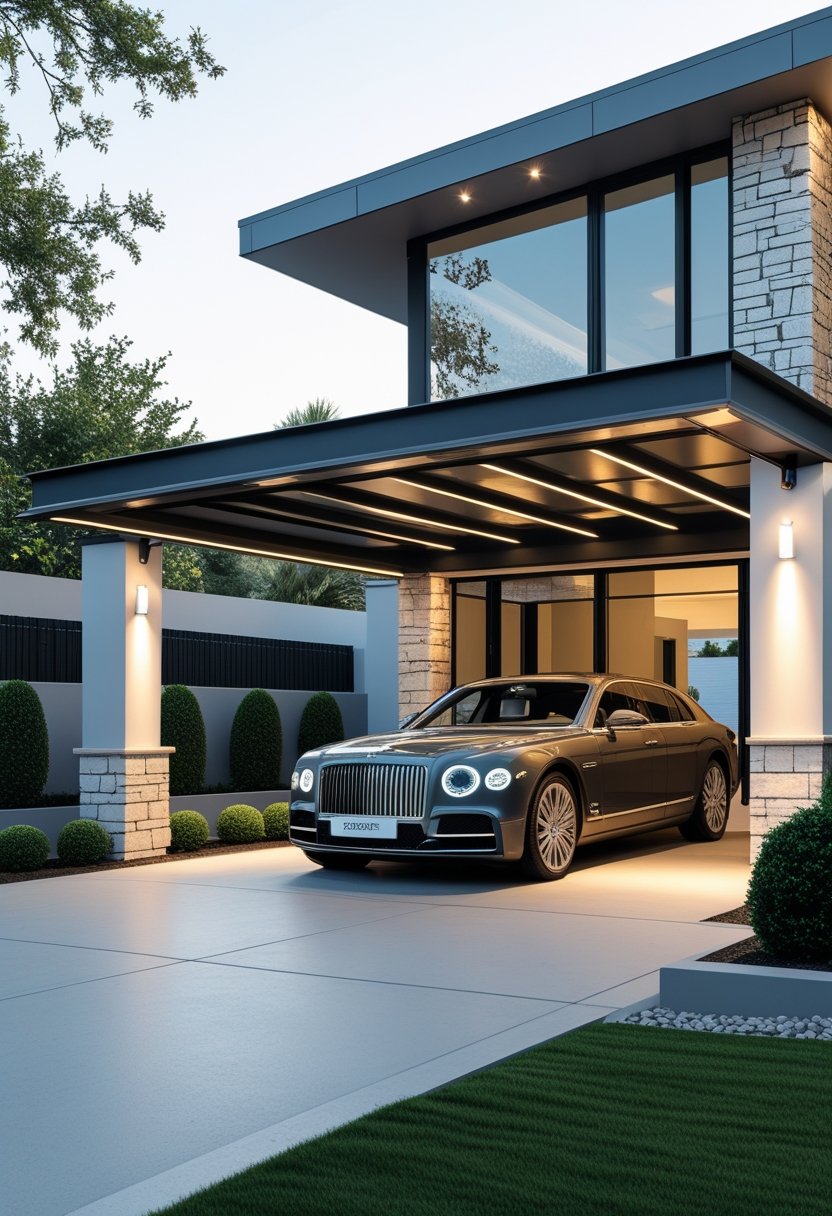
Bold yet functional designs create a seamless connection between shelter and home, boosting curb appeal while providing reliable protection. Whether integrated with green roofs, minimalist frameworks, or smart storage features, today’s carports cater to various lifestyles and design preferences.
For homeowners focused on both form and function, exploring these carport ideas reveals options that fit new constructions and exterior updates alike. Each design balances style with usability to elevate the outdoor space without overwhelming it.
Modern Carport Design Fundamentals
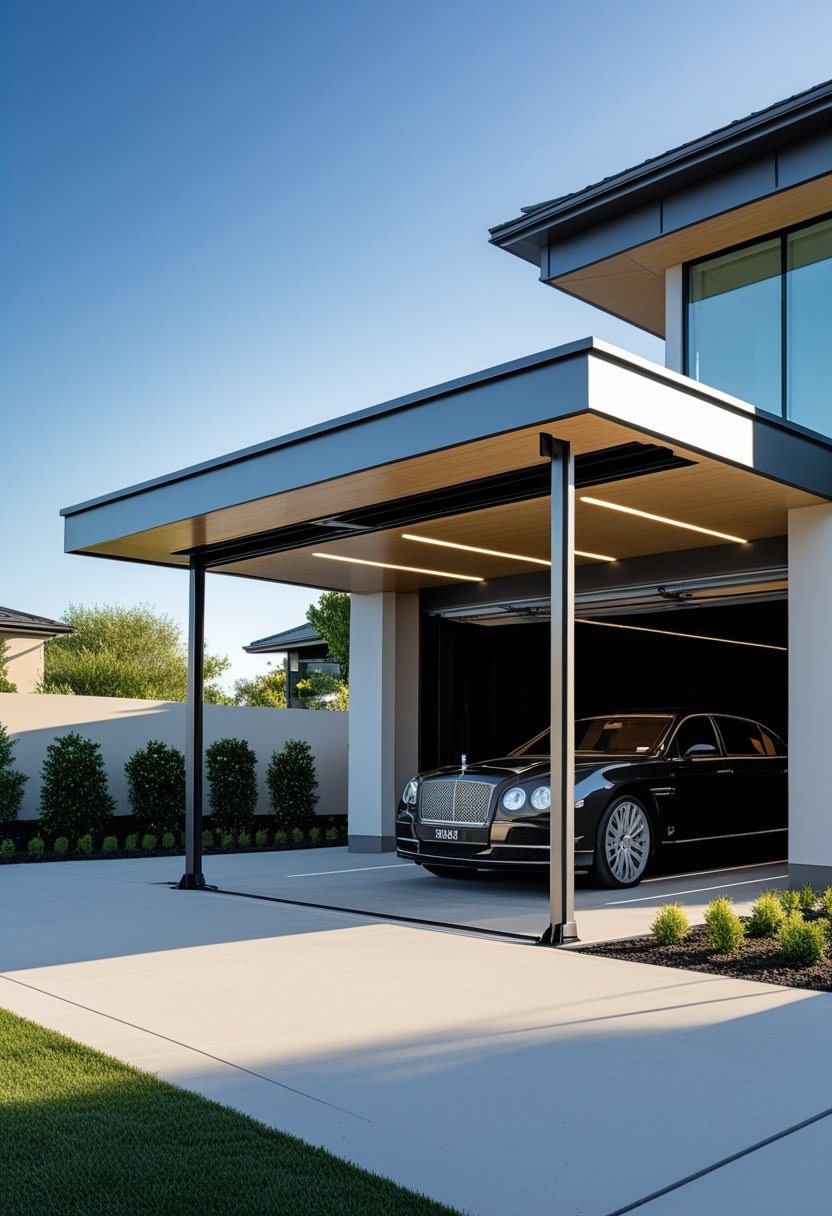
Modern carport design balances durability, visual appeal, and practical functionality. It incorporates materials and structural elements that protect vehicles while enhancing the home’s overall appearance. Thoughtful integration with architecture and layout is key to elevating curb appeal and usability.
Key Elements of Modern Carports
Modern carports typically feature clean lines, minimalistic structures, and high-quality materials such as steel, aluminum, and treated wood. A flat or gently sloped roof is common, often extending from the main house or standing independently.
Open sides maximize airflow and ease of access, while roof overhangs provide protection from rain and sun. Integrated lighting and storage solutions improve functionality. Choosing weather-resistant finishes ensures longevity and low maintenance.
Benefits of Contemporary Carport Designs
Contemporary carports offer versatile protection from weather elements like rain, snow, and sun damage. Unlike enclosed garages, they cost less to build and allow better ventilation, reducing mold and rust risks.
They also add architectural value by enhancing exterior aesthetics without overwhelming the facade. Many designs support sustainable features such as green roofs or solar panels, contributing to energy efficiency and eco-friendliness.
Integrating Carport Architecture with Home Aesthetics
Successfully combining a carport with a home’s design calls for matching materials, colors, and structural style. For example, using wood slats or brick walls in the carport can echo house finishes, creating a cohesive look.
Positioning the carport near the entrance or attaching it seamlessly ensures convenience and visual harmony. Designs that incorporate modern geometric shapes and subtle lighting highlight architectural lines while providing shelter.
Top Styles of Modern Carport Designs
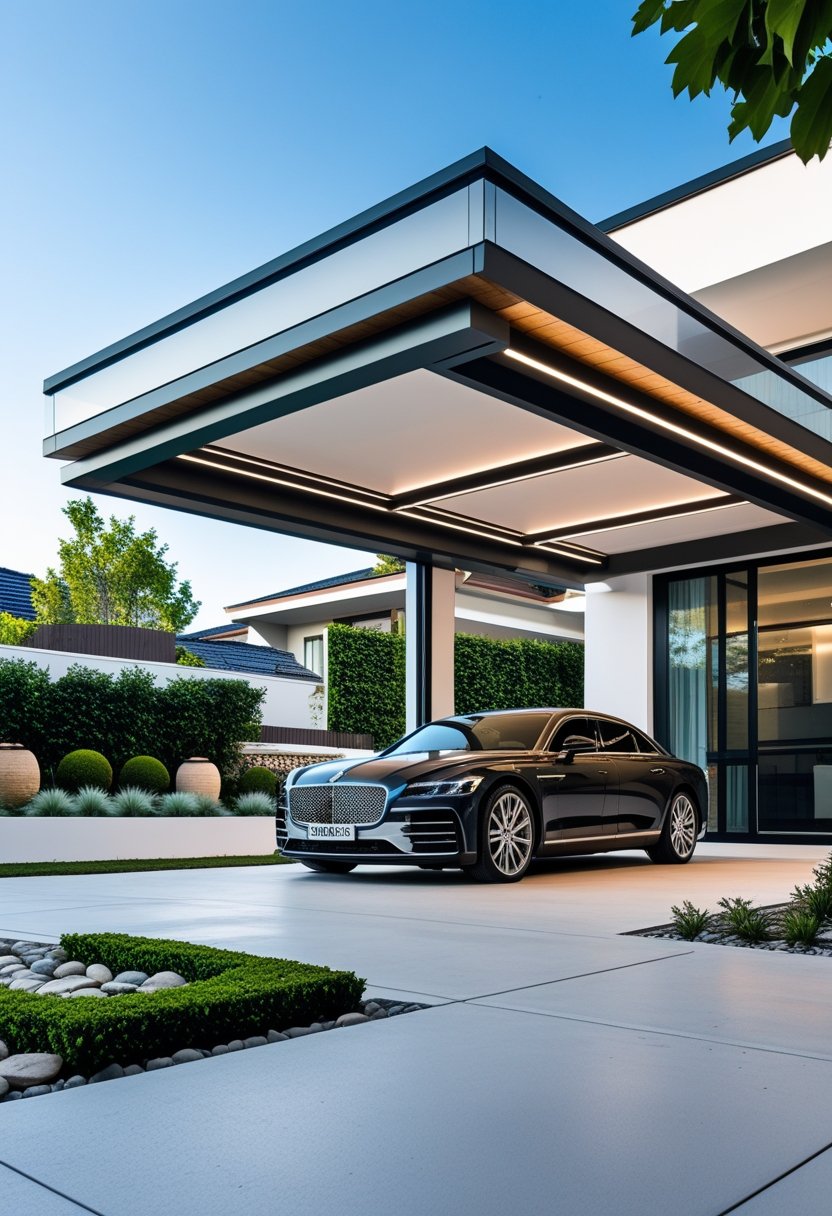
Modern carports blend protection, aesthetics, and innovative architecture. They focus on clean lines, functional use of materials, and design elements that either complement or contrast with the home’s facade. Key choices often involve roof shape, structural support, and integration with the surrounding environment.
Flat and Minimalist Carports
Flat-roofed carports emphasize simplicity and clean geometry. They use straight lines and minimal ornamentation, creating a sleek profile that fits well with modern and minimalist homes.
Materials like steel, aluminum, or timber are common, often finished with monochromatic or natural tones to maintain subtlety. Flat carports maximize overhead clearance, often allowing easy installation of solar panels or rainwater collection systems.
This design often attaches to the house or stands alone with slim, unobtrusive supports. The minimal structure reduces visual bulk while providing effective shelter from sun and rain.
Curved Roof Carport Concepts
Curved roof carports use smooth, arching rooflines to add organic shape and softness to a property’s exterior. This design offers both aesthetic appeal and structural advantages such as water runoff efficiency and strength.
Materials may include flexible metal sheets or laminated timber, allowing the roof to gently arc without heavy framing. Curved roofs can create a floating effect, making the carport appear delicate yet durable.
Often integrated with landscaping or green roofs, these carports bring a dynamic visual contrast to angular modern houses. The curved shape is especially suited to properties that seek a blend of natural flows and modern construction.
Cantilevered and Floating Designs
Cantilevered carports extend the roof beyond structural supports, often appearing to hover above the ground. This style maximizes open space, allowing easy access and unobstructed vehicle movement.
The supports are usually placed on one side, with strong beams or steel frames ensuring stability. The floating design emphasizes lightness and transparency, sometimes combining glass or metal mesh walls.
This style suits homes that value architectural drama and functional elegance. Cantilevered carports work well in tight spaces and can double as shaded outdoor areas when designed with integrated lighting or multi-use flooring.
Innovative Material Choices for Carports
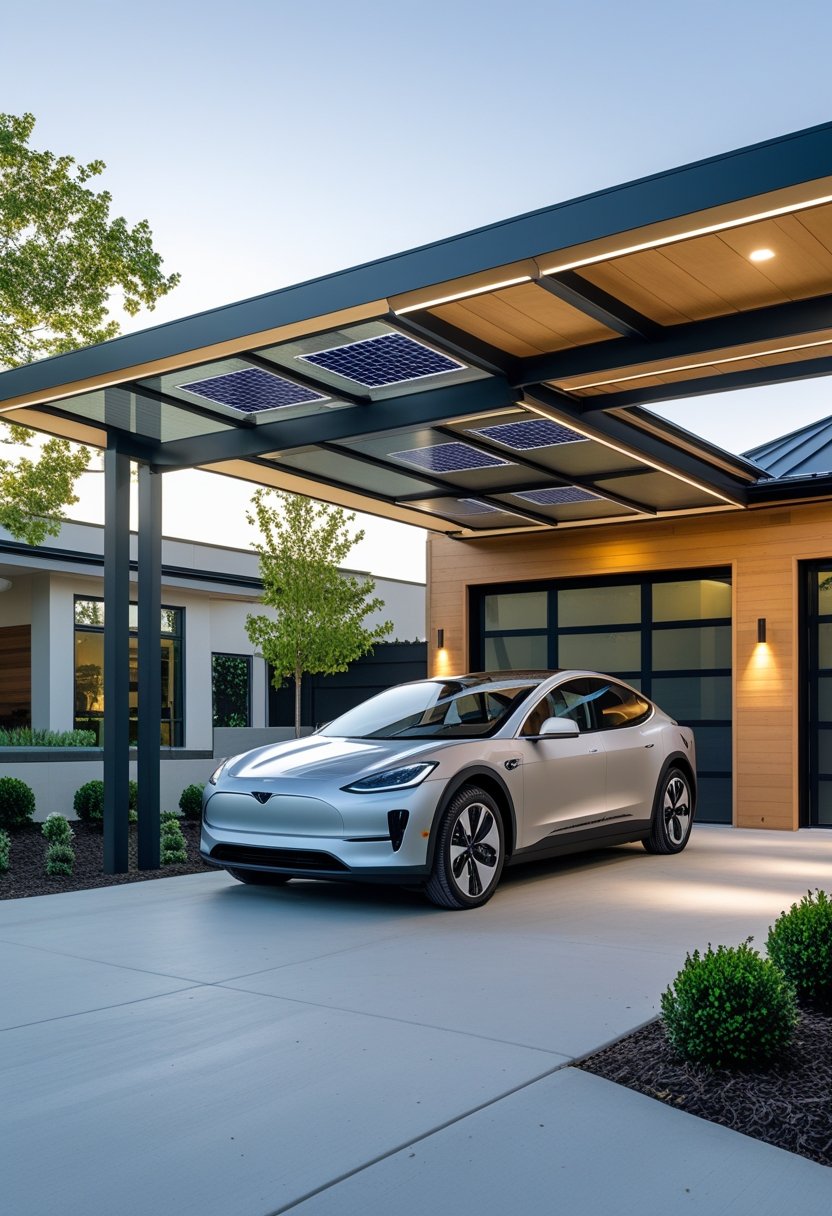
Choosing the right materials affects a carport’s durability, maintenance, and visual impact. Modern options range from natural wood to industrial metals and transparent roofing, each with distinct advantages and design implications.
Wooden Carport Options
Wooden carports offer a warm, natural look that complements many modern home styles. They are versatile and can be crafted from cedar, redwood, or treated pine, each providing different levels of resistance to weather and pests.
Wood allows for custom designs, from minimalist frames to more intricate detailing that adds architectural interest. Regular sealing or staining is needed to maintain its appearance and protect against moisture and UV damage.
Structurally, wood supports a variety of roof types and can easily incorporate additional features like storage or lighting. It also provides good insulation for vehicles, reducing heat buildup compared to metal structures.
Metal and Steel Structures
Metal carports, primarily steel and aluminum, are known for their strength and low maintenance. Steel offers high durability against elements and pests, while aluminum provides lightweight corrosion resistance, making it ideal for coastal or humid environments.
These materials allow for sleek, minimalist designs with clean lines that suit modern architectural aesthetics. Steel frames often support flat or slightly angled roofs and can be powder-coated for additional weather protection and color customization.
Metal carports are quicker to assemble than traditional wood and generally have longer lifespans with minimal upkeep. Their industrial look pairs well with contemporary homes but may require insulation to prevent heat accumulation.
Transparent and Polycarbonate Roofs
Polycarbonate and other transparent roofing materials combine functionality with style by allowing natural light to filter through while protecting vehicles from rain and UV rays. This option helps keep carports bright without additional lighting during the day.
These sheets are lightweight, impact-resistant, and often treated for UV protection, extending their lifespan while maintaining clarity. They can be installed on wooden or metal frames, providing design flexibility.
Transparent roofs also contribute to energy savings by reducing the need for artificial lighting in adjacent outdoor spaces. They work well in minimalist and modern carport designs, emphasizing openness and integration with the environment.
Functional Features and Smart Enhancements
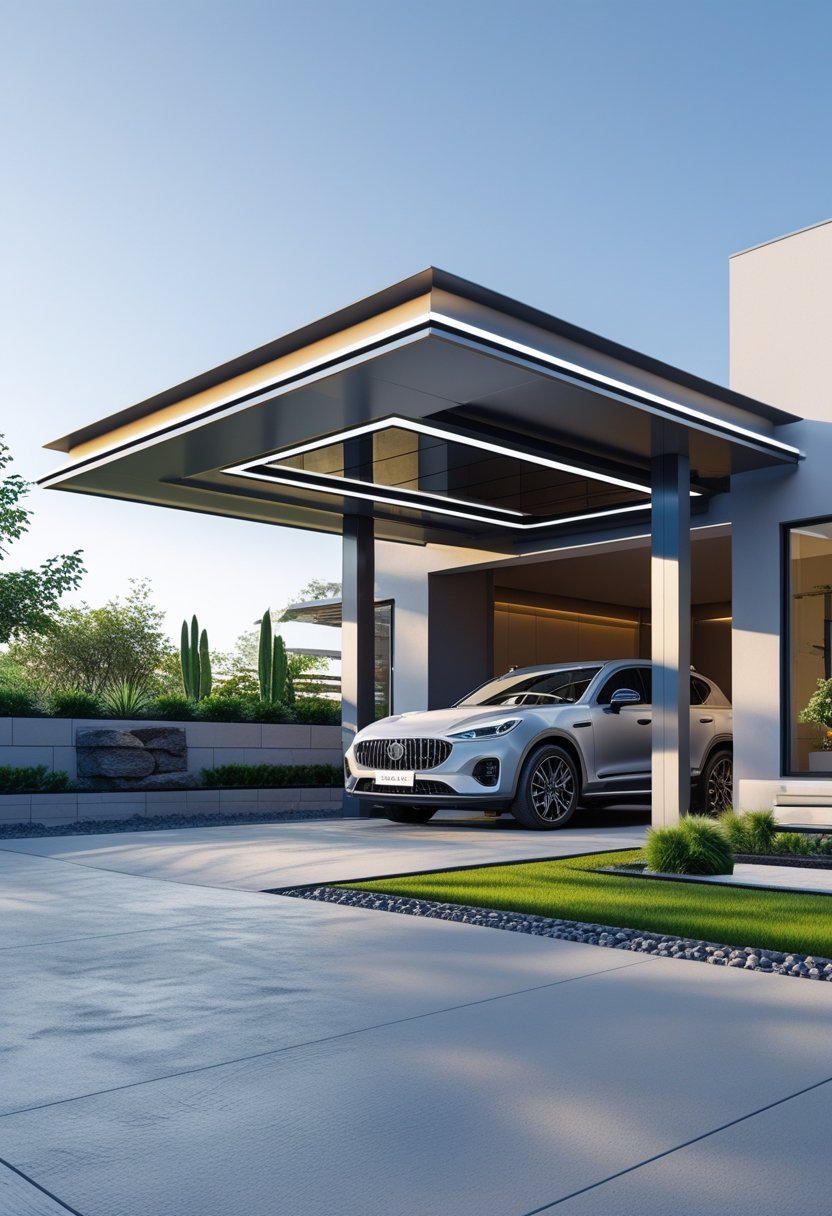
Modern carports offer more than just shelter. They incorporate features that improve energy efficiency, maximize space utility, and enhance safety with tailored upgrades suited to contemporary lifestyles.
Solar Panel Carport Solutions
Solar panel carports integrate photovoltaic panels directly into the roof structure, providing clean energy while shielding vehicles. This dual-use design can offset household electricity costs and contribute to sustainability goals.
Panels are typically mounted at optimal angles to maximize sunlight exposure. The sturdy metal or wooden frame supports the extra weight and wiring discreetly. Some systems include battery storage, allowing energy use during low sunlight hours.
Homeowners benefit from shading their vehicles, reducing heat load inside cars. These carports maintain a seamless modern aesthetic, fitting well with minimalist or industrial designs while adding measurable value through green technology.
Integrated Storage and Multifunctional Spaces
Carport design now frequently includes built-in storage solutions. Cabinets, shelves, or overhead racks can store tools, gardening gear, or vehicle maintenance supplies without cluttering the surrounding area.
This multifunctional approach transforms the carport into a versatile outdoor space. It can double as a workshop or bike parking while maintaining vehicle protection. Combining storage with parking maximizes usability on limited property lots.
Materials are chosen for durability and weather resistance, such as treated wood or powder-coated steel. Efficient layouts ensure easy access without obstructing vehicle movement, blending practical organization with clean, modern lines.
Lighting and Security Upgrades
Advanced lighting systems improve safety and aesthetics for carports. LED motion-sensor lights activate upon arrival or departure, offering convenience and deterring unwanted activity.
Integrated security cameras or smart locks enhance protection. Cameras with night vision and remote monitoring connect to home networks, allowing users to check their vehicle area anytime.
Soft accent lighting can be installed to complement architectural features, creating an inviting atmosphere without harsh glare. These enhancements combine practical defense measures with elevated curb appeal tailored to modern home exteriors.
Design Tips to Enhance Curb Appeal
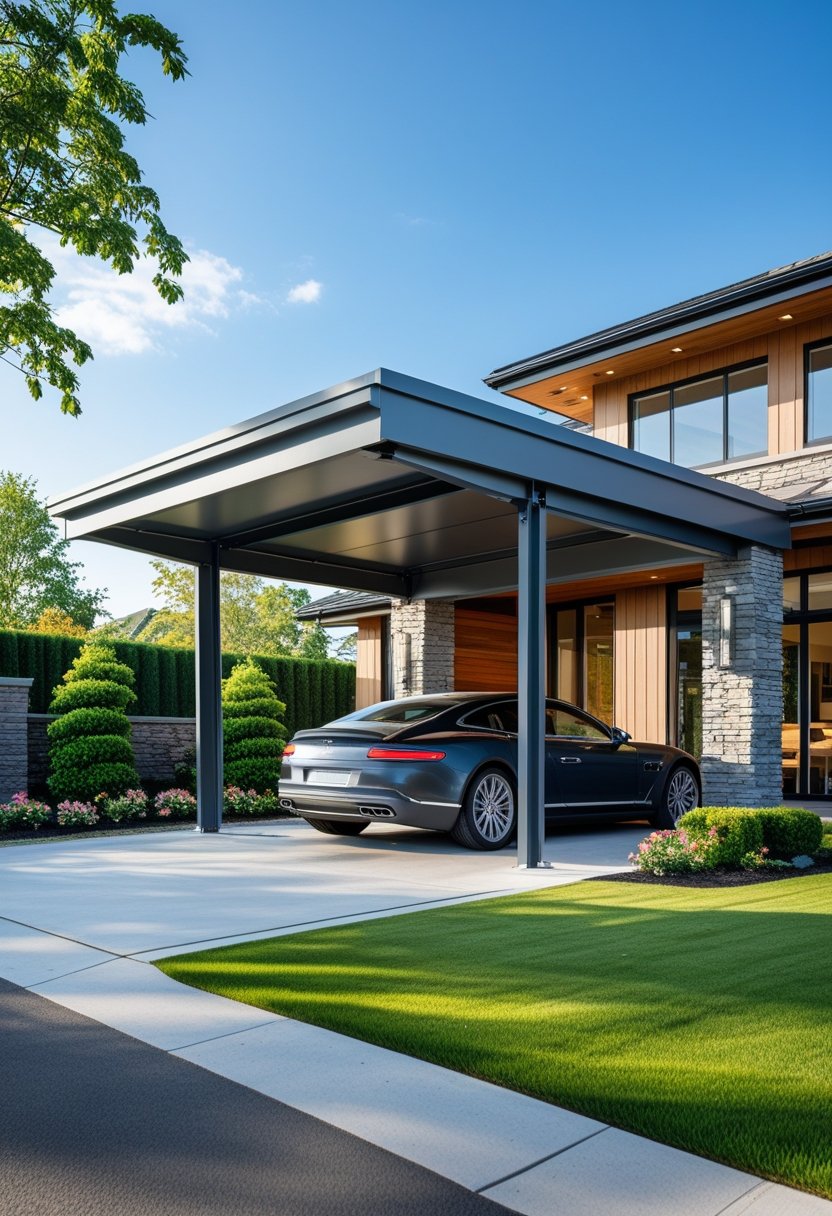
A carport’s design should integrate seamlessly with the home’s exterior and surrounding environment. Careful choices in landscaping, color, and architectural details can greatly improve curb appeal. Tailoring the carport to the house style ensures both style and function work together.
Blending Carports with Landscaping
Incorporating landscaping around a carport softens its visual impact and creates a harmonious look. Using native plants and low-maintenance greenery along the sides or entrance can frame the structure naturally.
Vertical elements such as trellises with climbing vines or strategically placed shrubs help the carport blend into the yard rather than stand out. Adding ground cover or stone pathways improves access and combines hardscape and softscape effectively.
It’s also useful to consider lighting integrated into landscaping. Path lights and spotlights aimed at plants or the carport’s architectural features enhance both safety and aesthetics during evening hours.
Color Schemes and Architectural Details
Matching the carport’s color with the house exterior ties the two structures together visually. Neutral or muted tones that echo the home’s siding or trim are effective. Alternatively, a contrasting accent color can highlight architectural features when balanced correctly.
Architectural details like exposed beams, metal accents, or custom roof shapes add character while maintaining a modern appearance. Choosing materials such as wood or metal frames that correspond with the home’s facade improves overall cohesion.
Details like integrated storage or built-in lighting can provide functionality without compromising style. Balancing simplicity with distinctive elements yields a clean but inviting exterior space.
Customizing for Different House Styles
Modern carport design adapts to various house styles, from minimalist to rustic. For minimalist homes, clean lines, flat roofs, and sleek metal materials fit well. These choices uphold simplicity and emphasize form over ornamentation.
For mid-century or contemporary houses, incorporating wood slats or mixed materials can complement existing architectural elements. The carport should reflect the home’s shapes and rooflines for unity.
Rustic or farmhouse styles benefit from natural materials like timber posts and pitched roofs. Adding features such as stone bases or lantern-style lighting ties the carport more closely to the home’s aesthetic.
Each carport idea should align with the home’s architectural intent while providing durable and practical vehicle protection.
Planning, Installation, and Maintenance Considerations
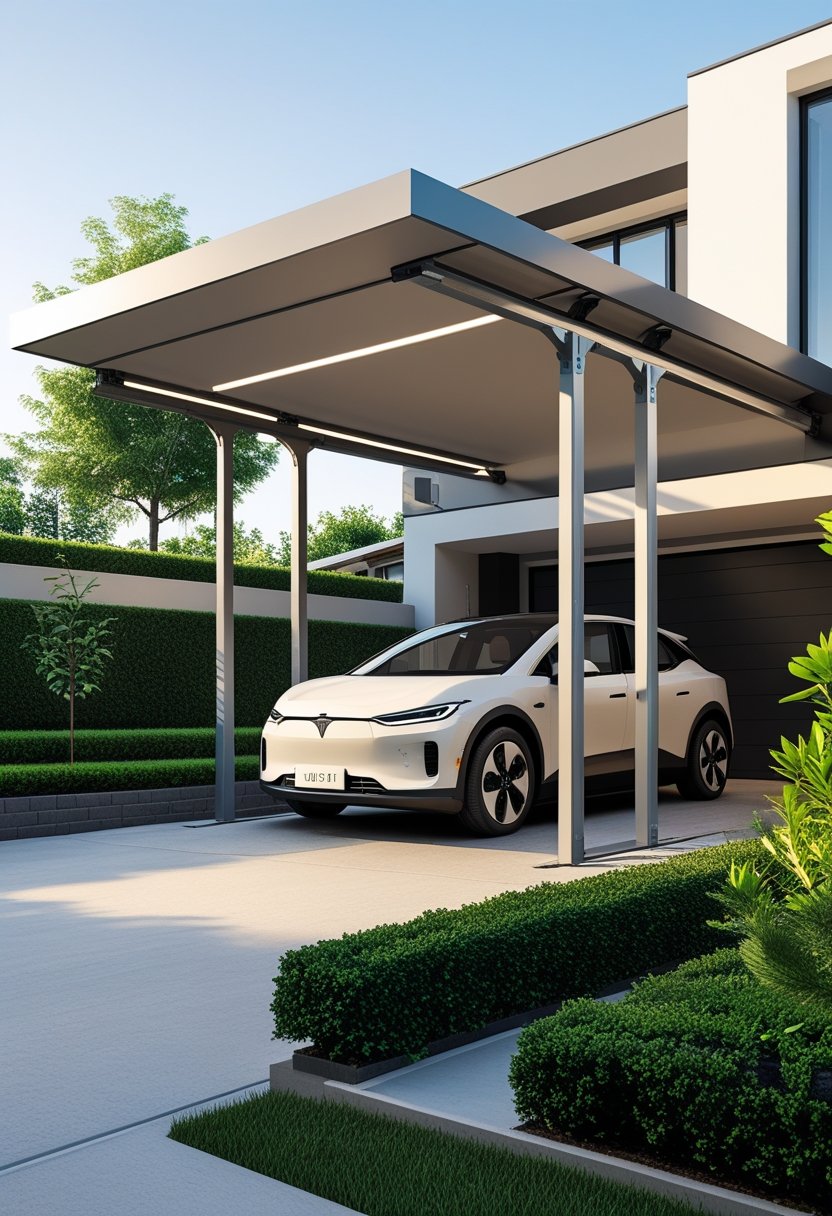
A well-planned carport integrates seamlessly with the property, meets local regulations, and remains durable over time. Attention to site placement, legal requirements, and upkeep ensures the structure performs effectively without unexpected issues.
Site Selection and Orientation
Choosing the right location is crucial for maximizing protection and usability. The carport should be situated to shield vehicles from prevailing wind and rain. It also helps to allow easy access to driveways and entry points.
Orientation affects sunlight exposure. Position the carport to avoid excessive sun glare for parked cars while allowing natural light to maintain visibility. Flat-roof designs work well attached to homes, while standalone carports require more consideration of surrounding space.
The ground must be level and stable. Proper drainage prevents water pooling around the base, which can cause structural damage or erosion. Materials used should suit the local climate for longevity.
Permits and Building Codes
Before installation, it is essential to check local zoning laws and building codes related to carport size, materials, and proximity to property lines. Many jurisdictions require permits to ensure safety and neighborhood conformity.
He or she should submit detailed plans including measurements, materials, and structural support systems. Compliance with fire safety standards and electrical codes applies when lighting or outlets are integrated.
Failing to obtain permits can result in fines or mandatory removal. It is advisable to consult with local building departments or professional contractors to navigate these regulations efficiently.
Long-Term Care and Sustainability
Maintenance extends the life of the carport and preserves its appearance. Regular inspection of beams, roofing, and fasteners detects early signs of wear such as rust, cracks, or loose fittings.
Cleaning schedules depend on material type; metal structures benefit from rust prevention treatments, while wooden carports require sealing or staining every few years. Clearing debris from gutters and roofs prevents water damage.
Integrating sustainable materials and designs, such as recycled steel or green roofs, reduces environmental impact. Using weather-resistant finishes minimizes upkeep and supports durability in changing climates.

Ana Luisa
Explore in-depth biographies, net worth insights, and exclusive updates on your favorite singers at Trionua.com. Discover the journeys, achievements, and latest news about music’s biggest stars.
One Comment