
Modern Gray Kitchen with Matte Cabinets & Marble Island
This modern gray kitchen combines elegance with practical design through its use of sleek matte gray shaker cabinets and a full-height dark subway tile backsplash. Its striking waterfall-edge marble island anchors the space, merging minimalist style with premium materials for both visual appeal and durability.
The open-concept layout encourages social interaction and everyday functionality, enhanced by statement glass pendant lighting that adds warmth. Stainless steel appliances and a range hood contribute an industrial edge, balancing the soft, natural tones of the marble countertops.
This kitchen design offers a sophisticated environment that supports both entertaining and daily use, showcasing how thoughtful materials and layout create a seamless modern living space.
Foundations of Modern Gray Kitchen Design
Modern gray kitchens combine refined style with practical elements. Selecting the right gray tones, balancing finishes, and incorporating texture are key to achieving a look that is both contemporary and inviting.
Key Characteristics of a Modern Gray Kitchen
A modern gray kitchen features clean lines and a restrained color palette, often anchored by gray shaker or flat-panel cabinets. The design focuses on simplicity and function while creating depth through contrasting details.
Matte and glossy finishes are commonly mixed, with matte cabinets offering subtle elegance and high-gloss surfaces adding a reflective dimension. Open layouts paired with integrated appliances support seamless flow and usability.
Textural elements like glass cabinet doors or metal hardware introduce visual interest without overpowering the space. Lighting, especially statement pendants, plays a crucial role in highlighting these details and warming the ambiance.
Choosing the Ideal Shade of Gray
Selecting the right shade depends on lighting, room size, and the desired mood. Mid-tone grays are versatile and work well in most spaces, providing a balanced backdrop.
Darker grays create drama and pair nicely with high-contrast accents such as white countertops or black fixtures. Lighter grays brighten the space, complementing minimalist or Scandinavian styles.
Warm gray tones with brown or taupe undertones add softness, while cooler grays with blue or green hints suit sleek, modern interiors. Testing samples under different light conditions prevents unwanted color shifts.
Incorporating Elegant Finishes for a Luxurious Feel
Finishes define the tactile and visual quality of a gray kitchen. Matte gray cabinets offer understated sophistication and hide fingerprints better than glossy options.
High-gloss gray kitchens bring a polished, contemporary look but require more upkeep. Pairing these finishes with natural stone countertops or marble islands introduces luxury and contrast.
Details such as waterfall edges on islands and full-height tile backsplashes elevate the design. Choosing hardware in brushed nickel or black enhances the modern industrial vibe while keeping the palette cohesive.
Gray Cabinetry: Styles, Colors, and Trends
Gray cabinetry offers homeowners a versatile and stylish foundation that can adapt to various kitchen designs. The range of cabinet styles and gray tones allows for personalized spaces, whether aiming for a minimalist modern look or a warm, classic kitchen. Emerging trends include a mix of finishes and two-tone combinations that enhance both function and aesthetic appeal.
Shaker, Slab, and Contemporary Gray Cabinets
Gray shaker cabinets remain a popular choice due to their clean lines and subtle detailing. They balance traditional craftsmanship with modern appeal, especially in matte gray finishes that reduce glare and emphasize texture.
Slab cabinets provide a sleek, unadorned surface, ideal for contemporary kitchens emphasizing minimalism. Their simple form pairs well with charcoal gray and dove gray, providing a smooth, polished look.
Contemporary gray cabinets often combine shaker and slab elements, incorporating flat panels with subtle edge detailing. This style suits open layouts and features like waterfall islands, enhancing a kitchen’s streamlined appearance.
Popular Gray Hues: Light, Charcoal, and Dove
Light gray cabinetry is favored for brightening spaces without the starkness of white. It works well in smaller kitchens or those seeking an airy atmosphere. Matte finishes in light gray emphasize softness and complement natural light.
Charcoal gray cabinets introduce depth and contrast, making them a dramatic yet versatile option. They highlight architectural features or pair well with metallic hardware and industrial elements like stainless steel appliances.
Dove gray and soft gray cabinetry offer a muted tone with a slight warmth. These shades suit traditional or transitional kitchens and work well with natural wood accents or marble countertops for timeless elegance.
| Gray Hue | Common Features | Best Uses |
|---|---|---|
| Light Gray | Soft, airy, matte finishes | Small, bright kitchens |
| Charcoal Gray | Deep, bold, industrial vibe | Modern, contrasting designs |
| Dove Gray | Muted, warm undertones | Classic and transitional kitchens |
Two-Tone and Monochrome Cabinet Concepts
Two-tone gray cabinets combine different shades or finishes to create visual interest and define zones within open-concept kitchens. For example, light gray upper cabinets paired with charcoal lower cabinets create a balanced contrast while maintaining a cohesive palette.
Monochrome gray cabinetry uses varying textures, such as matte and gloss, within the same shade to add depth without introducing new colors. This approach is popular in modern designs seeking subtle sophistication.
Both concepts allow for customization, ensuring gray kitchens stay timeless and adaptable. Designers emphasize clean lines and coordinated hardware to avoid overwhelming the space, maintaining focus on functionality alongside style.
Statement Surfaces: Countertops and Backsplashes
The kitchen’s surfaces focus on durability and style, combining materials that balance visual interest with practical upkeep. The interplay between sleek, solid countertops and textured backsplashes defines the room’s refined character.
Marble Countertops and Waterfall Islands
Marble countertops offer a timeless elegance, especially when paired with a waterfall edge. This design detail allows the marble to flow uninterrupted from the top to the sides of the island, creating a seamless, sculptural effect.
A waterfall-edge marble island serves both as a focal point and functional workspace. Its polished surface provides durability but requires regular maintenance to prevent staining.
White marble is a classic choice, lending brightness and contrast against darker cabinetry or backsplash tiles. The material’s natural veining adds subtle texture, enhancing minimalist kitchens without overwhelming the design.
Tile and Slab Backsplash Options
Backsplashes can define a kitchen’s tone through color, texture, and pattern. Dark subway tile backsplashes provide depth and an industrial feel that contrasts well with light countertops.
Alternatively, white subway tiles offer a clean, neutral base that complements marble or quartz countertops. Gray tiles introduce a modern, understated look that blends with matte cabinets and stainless steel appliances.
Both tile and slab backsplashes can extend to full height, covering the wall from countertop to ceiling. This approach creates visual continuity and protects walls effectively.
Contrasting Countertop Materials
Incorporating contrasting materials enhances dimension in kitchen design. Quartz countertops present a hard-wearing, low-maintenance surface ideal for high-traffic areas.
Concrete countertops deliver an industrial edge with customizable coloring but may require sealing. Combining materials, such as a marble waterfall island with quartz perimeter counters, balances luxury with practicality.
Contrasting textures between countertops and backsplashes bolster visual interest. For example, pairing smooth white countertops with dark textured tiles can emphasize both surfaces without clashing.
Functional Elements and Layout Enhancements
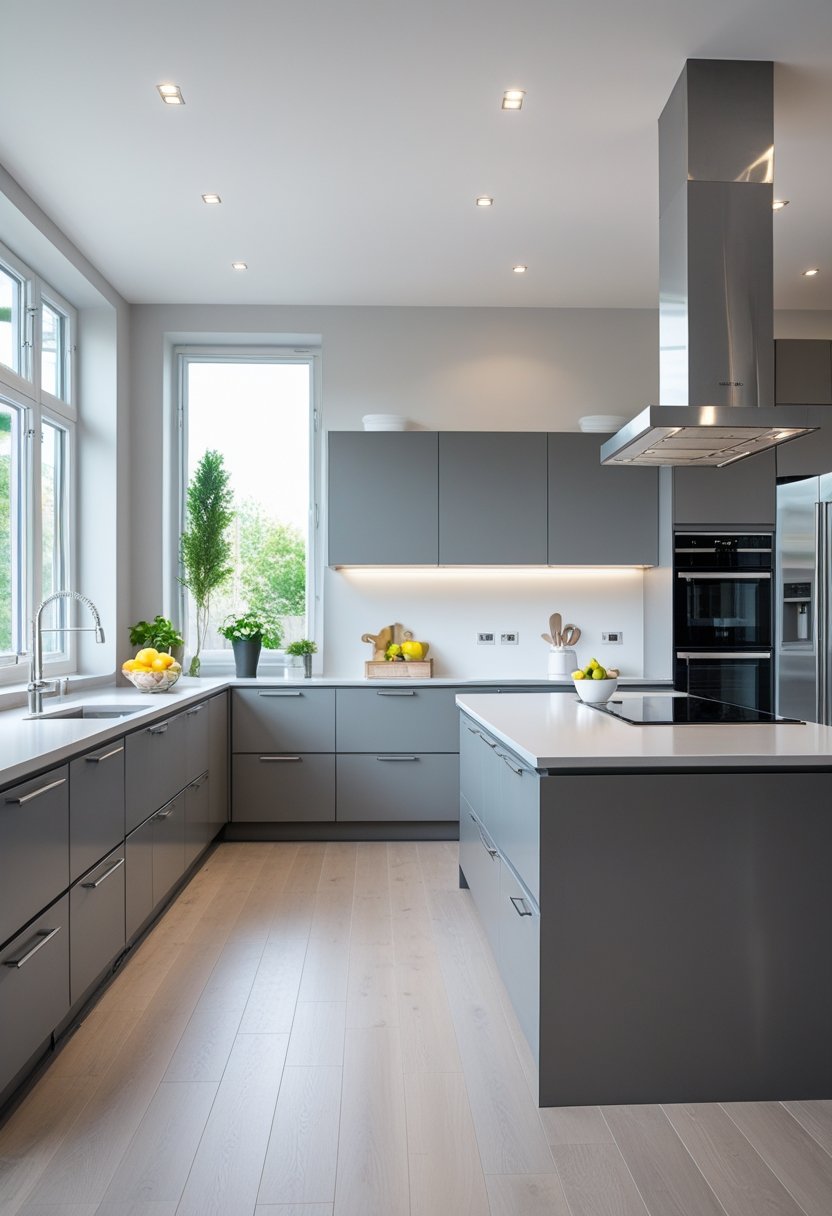
This kitchen combines thoughtful planning with practical features to support everyday use and social interaction. The design balances streamlined aesthetics with smart storage, efficient work zones, and flexible seating options. Each element contributes to a cohesive and organized space that remains easy to maintain.
Open-Concept Kitchen Planning
The open-concept layout maximizes flow between the kitchen, dining, and living areas. This design removes barriers, allowing for natural light to permeate the space and creating a seamless transition between zones. Open shelving enhances the kitchen’s openness, providing display space without crowding countertops.
Careful placement of workstations supports efficiency. The cooking area, sink, and refrigerator form a compact triangle to minimize movement. The layout encourages communication by positioning the island centrally as a gathering point, bridging the kitchen with adjacent rooms.
Integrated Appliances and Storage Solutions
Built-in appliances contribute to this kitchen’s clean and modern appearance. The stainless steel range hood and streamlined built-in oven and refrigerator blend into cabinetry, eliminating visual clutter. These appliances support cooking precision and maintain the space’s industrial chic tone.
Storage is maximized through the use of matte gray shaker cabinets with deep drawers and adjustable shelving. Open shelving sections offer quick access for frequently used items and add visual interest. Organization within cabinets reduces countertop mess, ensuring functionality meets style.
Island and Seating Configurations
The gray kitchen island is the focal point for both prep work and socializing. Its waterfall-edge marble surface withstands heavy use while delivering an elegant finish. The island features a combination of workspaces: stainless steel areas for easy cleaning and wooden bar-top sections that provide warmth.
Seating is arranged to encourage interaction. Fur-covered stools placed along the wooden counter create a comfortable setting for casual dining and conversation. This approach balances functionality with hospitality, supporting multiple uses from informal meals to entertaining guests.
Lighting and Hardware: Accents That Elevate
The balance of lighting and hardware plays a crucial role in enhancing both the style and function of this modern gray kitchen. Thoughtfully chosen fixtures and finishes add layers of texture and refinement, creating focal points while supporting everyday usability.
Pendant and Statement Lighting
Glass pendant lighting over the waterfall-edge island serves as the kitchen’s primary statement feature. These fixtures combine transparency with a sculptural form, providing illumination without visual heaviness. Their placement is key, focusing light directly on work surfaces and enhancing the open-concept feel.
Statement lighting often incorporates warm tones in the bulb or fixture details, offering contrast to the cool gray cabinetry. Glass or crystal elements increase light diffusion and add subtle sparkle, balancing minimalism with sophistication.
Hardware Trends: Black, Gold, and Brass
Hardware choices in this kitchen elevate the design through finish and form. Matte black fixtures and handles introduce a modern, industrial edge, complementing the stainless steel appliances and dark backsplash.
Gold and brass handles provide warmth against the matte gray cabinets, injecting a hint of luxury and mid-century modern flair. These metals also coordinate with other accents, such as lighting fixtures or faucets, creating cohesion.
Copper hardware is another option gaining attention for its warm tone and unique patina over time, but here gold and brass remain the dominant accents for their timeless appeal.
Under-Cabinet and Ambient Lighting
Under-cabinet lighting enhances functionality by illuminating countertops for prep tasks without casting shadows. LED strips or puck lights in a warm white hue prevent glare and maintain a cozy atmosphere.
Ambient lighting complements the primary sources, softly diffusing light around the room’s edges. It enhances depth and invites warmth during evening hours, balancing the cooler color palette of the cabinetry and backsplash.
Together, these layers of lighting optimize visibility while reinforcing the kitchen’s sophisticated and inviting mood.
Complementary Finishes and Decor
This kitchen balances cool gray tones with thoughtful textures and materials that add warmth and visual interest. It incorporates a mix of natural elements, industrial details, and carefully chosen accessories to enhance the overall aesthetic without disrupting the minimalist feel.
Natural Wood Accents and Warmth
Natural wood accents bring warmth to the sleek matte gray cabinets and the marble island. Wooden elements such as barstools, floating shelves, or trim enhance the tactile experience and soften the cooler color palette.
Using wood cabinets or wooden accents with mid-tone or light finishes contrasts well with darker gray surfaces. This choice keeps the space grounded and inviting.
Incorporating wood also adds an organic texture that complements stone and metal finishes, preventing the kitchen from feeling too cold or clinical. It encourages a balanced, lived-in atmosphere.
Industrial Touches: Metal and Exposed Brick
Industrial elements introduce an urban edge that suits modern gray kitchens. Stainless steel appliances and a metal range hood create a sleek, functional core with reflective surfaces.
Exposed brick walls, either original or an accent installation, add texture that contrasts with smooth cabinetry and quartz counters. The brick’s earthy tones break up monotony and contribute to a raw, yet sophisticated vibe.
Mirrored backsplashes can provide a modern twist on industrial design by reflecting light and adding depth without interfering with the gray color scheme. They pair well with metal fixtures and open shelving.
Softening Gray with Accessories and Greenery
Accessories in muted hues and natural materials help refine the kitchen’s palette. Textiles such as linen towels or woven baskets add softness and tactile contrast.
Potted herbs placed on windowsills or countertops introduce lively greenery. These living accents refresh the space, bringing subtle color and organic form that enlivens the gray foundation.
Functional decor like glass jars or ceramic bowls expands texture variety while remaining understated. Together, these elements reduce any starkness and create a more welcoming, comfortable environment.

Ana Luisa
Explore in-depth biographies, net worth insights, and exclusive updates on your favorite singers at Trionua.com. Discover the journeys, achievements, and latest news about music’s biggest stars.

One Comment