Lush Modern Garden Oasis: Sustainable Backyard Design Ideas
Transforming an outdoor living space into a lush modern garden oasis requires a thoughtful combination of style, sustainability, and comfort. This stunning backyard design features vibrant blooms paired with cozy rattan furniture and bold cushions, creating a welcoming atmosphere. A chic wooden pergola draped in greenery adds structure and shade, giving the space a natural yet sophisticated appeal.

The blend of vertical wall planters, artificial turf, and stone landscaping creates a harmonious balance between contemporary aesthetics and eco-friendly elements. This approach maximizes both visual interest and maintenance ease while supporting sustainable living. The design suits various purposes such as boho-inspired patios, intimate garden parties, or peaceful outdoor retreats.
By integrating colorful plants with durable, stylish furnishings, this backyard concept offers a refreshing way to enjoy and enhance outdoor living. Its thoughtful mix of textures and materials invites relaxation while reflecting modern trends in sustainable garden design.
Designing a Modern Sustainable Backyard Oasis

Creating a backyard that combines modern design with sustainability requires thoughtful layout, material selection, and plant choices. This approach ensures functionality, aesthetic appeal, and environmental responsibility in the outdoor space.
Maximizing Outdoor Space with Modern Principles
Efficient use of space begins with zoning—dividing the backyard into functional areas such as seating, garden beds, and pathways. Vertical elements like wall planters increase greenery without sacrificing ground area.
Artificial turf provides a low-maintenance, clean lawn alternative while conserving water. Stone landscaping accents define areas and add texture without high upkeep. Using containers for plants allows flexibility and seasonal rotation without altering the permanent garden.
Smart lighting and multi-use furniture expand usability, making the space welcoming day and night. Keeping pathways clear and using modular seating enhances flow and adaptability. This method balances openness and intimacy within a limited footprint.
Balancing Sustainability and Style
A sustainable backyard incorporates eco-friendly materials with modern aesthetics. Rattan furniture with weather-resistant cushions blends natural textures with bold colors, elevating comfort without synthetic excess.
Native plants and low-maintenance ground cover reduce water use and support local biodiversity. Mulching conserves moisture and suppresses weeds, reducing maintenance. Incorporating containers and raised beds allows better soil control and efficient watering.
The pergola draped in climbing greenery offers shade and natural cooling, minimizing reliance on energy-intensive remedies. Integrating solar lighting and recyclable materials further enhances sustainability without sacrificing style.
Eco-Friendly Backyard Design Elements
Selecting plants such as drought-tolerant natives aligns with sustainable goals. These species demand less water, fertilizer, and pest control compared to exotic or high-maintenance varieties. Ground covers help stabilize soil, prevent erosion, and reduce mulch needs.
Using mulch made from organic materials supports soil health while lowering evaporation. Containers crafted from recycled or biodegradable substances encourage eco-conscious choices. Efficient irrigation methods, like drip systems, target water use precisely.
Stone or gravel pathways improve durability, reduce runoff, and require minimal upkeep. Combining these design elements results in a durable, sustainable backyard that remains visually appealing and easy to maintain year-round.
Lush Garden Ideas for Vibrant Greenery

Creating vibrant greenery starts with combining diverse plants that add texture, color, and structure. Layering different heights and types of foliage enhances visual depth, while strategic use of flowering shrubs and ornamental grasses introduces movement and seasonal interest. Integrating vertical and wall planters maximizes space and brings greenery to eye level.
Using Layered Planting for Depth
Layered planting involves arranging plants in tiers, starting with low groundcovers, followed by mid-height shrubs, and topped with taller trees or palms. This approach adds dimension and creates a sense of fullness.
For example, ferns and low-growing herbs form a soft base while flowering shrubs such as hydrangeas or viburnums provide mid-level structure. Taller palms or small trees frame the garden edges, drawing the eye upward.
Layered planting also supports wildlife by offering varied habitats and enhances microclimates, protecting more delicate species. Mixing textures, like broad-leaved tropical plants with fine ornamental grasses, enriches the design.
Incorporating Flowering Shrubs and Colorful Blooms
Flowering shrubs bring vibrant color and seasonal interest to the garden. Common choices include azaleas, camellias, and hibiscus, which thrive in a modern, lush setting.
Bright blooms contrast well against deep green foliage, enlivening the space without overcrowding. Strategic placement near seating or pathways highlights these visual focal points.
Using a mix of perennial flowers and shrubs ensures continuity throughout the year. Combining bold colors, like magenta wisteria or soft pink rhododendrons, creates a dynamic yet harmonious palette.
Seasonal flowering also attracts pollinators, enhancing biodiversity and garden health.
Tropical and Ornamental Grasses
Tropical plants such as palms, ferns, and cycads add an exotic flair and a lush texture that complements layered planting. Their large leaves and varied shapes create a natural canopy effect.
Ornamental grasses, like fountain grass and blue fescue, introduce movement, especially when swaying in the breeze. Their slender foliage contrasts well with denser tropical plants.
Both types are often low-maintenance and drought-tolerant. They work well planted along borders or grouped in clumps to frame patios and pathways.
This blend balances soft, flowing lines with bold structures, reinforcing a modern garden’s natural yet curated aesthetic.
Adding Vertical Gardens and Wall Planters
Vertical gardens maximize limited space by allowing lush greenery to climb walls or hang from structures. Installing vertical gardens with a mix of climbing plants, such as ivy or wisteria, creates natural curtains that soften rigid surfaces.
Wall planters are ideal for growing herbs or smaller foliage plants, adding fresh greenery at eye level. Hanging plants in macramé or metal containers further diversify textures and fill overhead space with vibrant life.
This technique not only increases planting area but also improves air quality and insulates walls naturally. Well-designed vertical gardens complement ground planting schemes, reinforcing the garden’s sustainable and stylish character.
Creating Cozy and Stylish Outdoor Living Areas
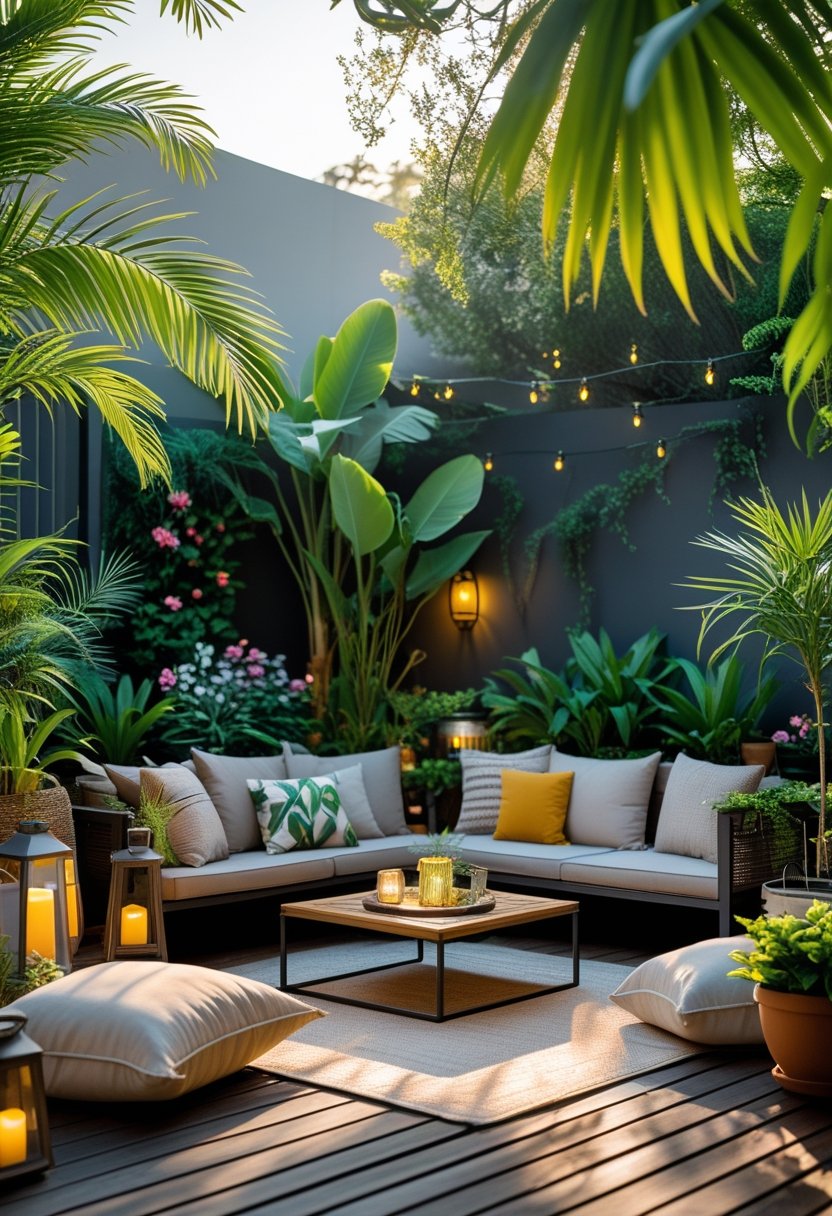
Designing an outdoor living space requires intentional choices to balance comfort, style, and functionality. Thoughtful selection of furniture, layered textiles, and clearly defined zones enhances the atmosphere and usability of the backyard retreat.
Selecting Comfortable Outdoor Furniture
Choosing the right outdoor furniture focuses first on durability and comfort. Materials like rattan and powder-coated aluminum offer weather resistance while maintaining an elegant appearance. Plush seating options, such as cushioned sofas and benches, create inviting spots for relaxing or socializing.
Bold cushions in vibrant colors add both comfort and visual appeal, complementing natural greenery and wooden elements. It’s important to select cushions with water-resistant fabric to ensure lasting use.
Furniture should support multiple purposes. A versatile sectional or modular seating can adapt for intimate lounging or larger gatherings. Prioritizing ergonomic design keeps outdoor seating comfortable during long periods.
Styling with Cozy Textiles and Rugs
Outdoor rugs anchor seating areas while introducing texture and warmth. Choosing rugs made from synthetic fibers ensures resilience to moisture and fading. Layering rugs with assorted patterns or solid colors contributes to a cozy ambiance.
Throw blankets and pillows further soften the space and provide comfort during cooler evenings. Bold textiles can echo the theme of cushions or the natural palette surrounding the garden.
Maintaining easy-to-clean textiles is essential for practical use. Opting for machine-washable covers or wipeable surfaces balances beauty with low maintenance.
Defining Lounge and Dining Zones for Entertaining
Clearly defining different functional areas enhances flow and encourages use. Separating a lounge area with comfortable seating from a dining space with a sturdy table aids in organization and comfort.
Positioning furniture to face key views or focal points like a pergola or fire pit creates natural gathering spots. Distinct zoning can be signaled through outdoor rugs or changes in flooring texture, such as stone or artificial turf.
Including flexible seating options like movable chairs and benches allows the space to adapt for garden parties or quiet evenings. Ensuring pathways remain unobstructed preserves ease of movement throughout patios and open areas.
Pergolas, Decks, and Structures for Shade and Ambiance
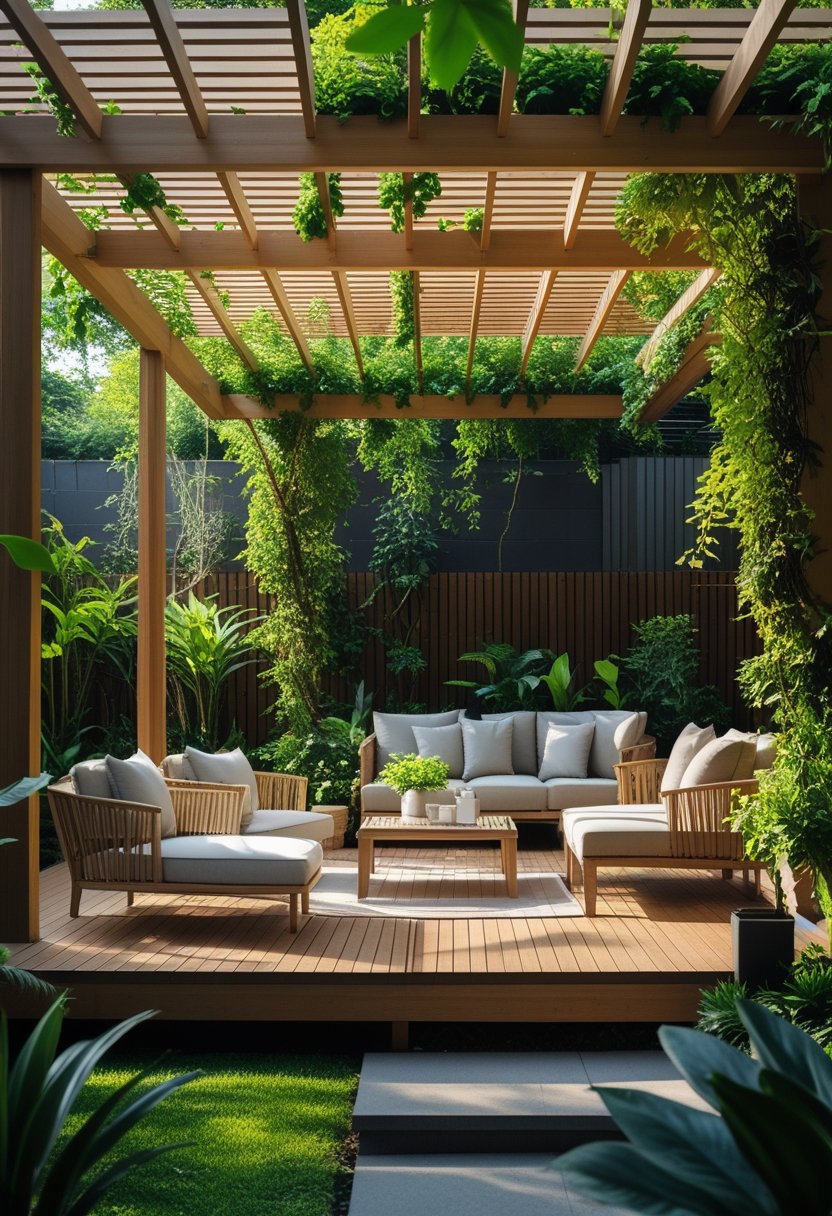
Outdoor structures create functional shade while adding style and character. Thoughtful placement and design turn basic spaces into inviting retreats. Balancing solid frameworks with natural elements complements both comfort and aesthetics.
Choosing a Chic Wooden Pergola
A wooden pergola provides classic charm and structural definition for any garden. Selecting durable wood like cedar or redwood ensures longevity and resistance to weather.
Contemporary designs often feature clean lines and wide beams to maximize shade without blocking light entirely. Sizes and shapes should match the scale of the deck or patio to maintain harmony.
Adding retractable canopies or curtains offers flexible shade and protection from light rain. Such choices enhance usability during various weather conditions while preserving an open-air feel.
Enhancing with Greenery and Climbing Vines
Climbing plants like ivy, wisteria, or jasmine soften the pergola’s geometric edges with lush, natural texture. These vines provide seasonal blooms, color, and gentle shade.
Vertical wall planters near or on the pergola increase greenery while saving space, perfect for smaller yards. They promote a layered look when combined with trailing vines overhead.
Proper support and regular maintenance are essential to avoid damage to the wood and to control growth. The right choice of climbing species depends on local climate and sun exposure.
Incorporating Privacy Screens and Outdoor Art
Privacy screens add seclusion, making backyard spaces feel like private escapes. Materials range from slatted wood panels and bamboo to metal mesh, depending on style preference and desired opacity.
Integrating outdoor art such as metal sculptures or wall-mounted pieces balances function with artistic flair. Sculptural elements near seating areas or swings create focal points enhancing ambiance.
These features complement pergolas and decks by defining space while allowing airflow and light. Thoughtful placement maintains openness without sacrificing privacy or visual interest.
Water Features for Tranquility and Elegance

Water elements can add both calm and sophistication to a backyard, blending natural sounds with visual appeal. Thoughtful integration of ponds, fountains, waterfalls, and pools enhances the sensory experience while maintaining a modern, sustainable design.
Adding Ponds and Fountains
Ponds provide a natural focal point and support local wildlife, especially when planted with native aquatic plants. A well-designed pond balances size, shape, and depth to support clear water and aquatic life with minimal maintenance.
Fountains add structured sound and movement. Options range from simple tiered basins to sculptural, modern designs. They often require a small pump and are suitable for compact spaces. Combining ponds and fountains can amplify visual interest and promote a soothing atmosphere.
Incorporating Waterfalls, Streams, and Birdbaths
Waterfalls introduce dynamic flow and natural sound, easing stress and masking neighborhood noise. They can be designed as standalone features or integrated into rock gardens or streams.
Artificial streams guide water gently across the landscape and connect key areas like patio and garden. Birdbaths offer quiet moments for observing local birds, enhancing the connection between homeowners and nature. Well-placed, these features contribute to a layered water experience.
Designing Infinity Pools and Backyard Spas
Infinity pools create a seamless visual edge that blends the water with the surrounding landscape or horizon. Their clean lines complement modern styles and add a high-end feel to the outdoor area.
Backyard spas or hot tubs provide a year-round place to relax and soothe muscles, with temperature control and jets. Incorporating these with sustainable materials and water-efficient technologies ensures comfort without excess resource use. Together, pools and spas serve both aesthetic and functional roles.
Modern Landscaping and Pathway Inspirations

A thoughtful combination of materials and textures defines this modern garden space. It highlights functional pathways, smart use of synthetic and natural lawn elements, and strategic ground coverage to sustain both beauty and practicality.
Integrating Stone Pathways and Accents
Stone pathways serve as both practical walkways and key visual elements. Using natural stone or polished pavers allows for clean, geometric lines that fit modern aesthetics. These paths can be straight for minimalism or gently curved to break monotony.
Stone landscaping accents complement these pathways by adding texture and depth. They often border planting beds or outline seating areas, providing contrast against softness of greenery or turf. Durable stones like slate, granite, or river rock ensure longevity and low maintenance.
Proper installation includes leveling the base and sealing gaps to prevent weed growth. Lighting along stone pathways enhances safety and highlights their clean finishes at night.
Blending Artificial Turf and Living Lawn
Artificial turf lawns offer a maintenance-free, vibrant green option that pairs well with natural lawn patches. This mix balances durability with organic texture. It creates defined zones for activities and visual relief while reducing water use.
Using synthetic turf in high-traffic or shaded areas maintains lushness where grass may struggle. Meanwhile, natural lawn screens or frames these spaces, adding life and seasonal variation.
Choosing high-quality turf with realistic fibers improves appearance. Proper drainage layering is critical beneath the artificial turf to avoid water pooling and soil compaction.
Maintaining Structure with Mulch and Ground Cover
Mulch is essential in modern landscaping for moisture retention and weed suppression. Organic mulches like bark chips or cocoa hulls enrich soil as they decompose. They also soften transitions between stone features and plants.
Ground cover plants provide living mulch alternatives with a clean, green carpet effect. Creeping thyme, sedum, or ajuga are popular choices that add color and texture without overwhelming garden pathways.
Using mulch and ground covers together helps maintain defined garden zones. This structure supports healthy plants and reduces maintenance efforts in contemporary outdoor spaces.
Sustainable Lighting and Outdoor Ambiance

Creating the right lighting enhances both the style and function of an outdoor space. Selecting efficient, well-placed fixtures can highlight garden features, ensure safety, and set a relaxing mood. Eco-conscious choices reduce energy use while maintaining an inviting atmosphere.
Choosing Outdoor Lighting Options
String lights and fairy lights add subtle warmth and charm, ideal for patios or pergolas draped in greenery. Lanterns provide soft, diffused illumination suitable for corners or seating areas, blending style with practicality.
Spotlights focus on key features like vertical planters or stone accents, adding depth and visual interest. Solar-powered path lights mark walkways and borders without the need for wiring, increasing safety discreetly. Layering different fixtures creates a flexible, balanced ambiance tailored to various outdoor activities.
Incorporating Solar-Powered and Eco-Friendly Lights
Solar-powered lights use renewable energy, cutting electricity costs and simplifying installation. They recharge during the day and automatically illuminate at dusk, making them ideal for pathways, garden beds, and decorative elements.
Modern eco-friendly fixtures often feature LED bulbs, which last longer and use less power than traditional bulbs. These lights offer bright, consistent output with minimal environmental impact. Combining solar power with energy-efficient LEDs maximizes sustainability without compromising brightness or design.
Luxury Features for Entertaining and Relaxation

This backyard design integrates key elements that elevate outdoor living for comfort and social gatherings. From functional cooking spaces to intimate seating options, these features enhance both style and usability.
Designing Outdoor Kitchens and Dining Areas
An outdoor kitchen often serves as the centerpiece for entertaining. Including a built-in grill, countertop space, and weather-resistant cabinetry allows for seamless food preparation and service.
A well-planned dining area with sturdy tables and comfortable seating encourages extended gatherings. Materials like teak or rattan paired with bold cushions fit well in modern garden settings. Lighting should be adjustable to create ambiance from daytime meals to evening dinners.
Proper layout ensures efficient workflow and easy guest movement. Adding accessories such as an outdoor sink or small refrigerator further increases convenience without sacrificing style.
Adding Fire Pits and Fireplaces for Evening Gatherings
Fire pits provide warmth and a focal point for outdoor lounge spaces. Choosing cozy fire pits with stone or metal surrounds complements the natural elements of a sustainable backyard.
Fireplaces add a sense of luxury and can be integrated into seating areas or pergolas. They extend usability into cooler seasons and enhance atmosphere.
Location matters; placing fire features near seating avoids smoke disruption. Consider gas models for ease and cleanliness, or wood-burning options for traditional appeal.
Enhancing With Hammocks, Swings, and Lounges
Hammocks and swings introduce a relaxed vibe and invite restful breaks in the garden. Durable materials suitable for outdoor exposure maintain comfort and longevity.
Rattan lounges with bold, weatherproof cushions align with the boho aesthetic while providing stylish seating. These elements encourage casual conversation or quiet moments surrounded by greenery.
Arranging these pieces to take advantage of shade and views promotes balance between comfort and nature, making the space a true retreat.

Ana Luisa
Explore in-depth biographies, net worth insights, and exclusive updates on your favorite singers at Trionua.com. Discover the journeys, achievements, and latest news about music’s biggest stars.